Marin Ultra Challenge – Inspiration, Preparation, Execution

mucstartMarin Ultra Challenge is one of those events that immediately captures the imagination. In 2013 it was held in June and I sadly couldn’t make it work with my schedule. When I heard Inside Trail Racing was moving the event to March, and it was still a full four weeks out from Lake Sonoma, I just had to be a part of the action, especially since I live just 60mi up the road.
photo(3)Marin Ultra Challenge (MUC) epitomizes the essential beauty of our growing sport. Like the iconic Golden Gate Bridge itself, MUC represents a gateway into the increasingy vast realm of ultrarunning bliss, offering four unique race distances, each with all the spectacular scenery one finds running on the trails in the Marin Headlands, Mt. Tam, and Muir Woods. There’s no shortage of climbing and descending, with over 10,000′ of glorious ups-n-downs; definitely a job for the world’s best ultrarunning shoe:

A rising tide lifts all ships. In recent months, I’d experienced my best performances in the Marin Headlands, totally inspired by the efforts of my fellow ultrarunners. Two experiences, in particular, are Rob Krar’s brilliant performance at North Face Endurance Challenge (NFEC) in December, and Dave Mackey’s “Dirty Double”, where, within one week, he set a course-record at Quad Dipsea and immediately turned it around and ran stoic top-10 at NFEC. These masterful performances, having run along side both these guys in the early miles, pushed me to dwell deeply upon what was possible for myself at the 50mi distance, and beyond.

Change the way you look at things and the things you look at change. As a teacher, an endurance sports coach, and an ultrarunner, I know that if I’m not learning I’m not growing—no challenge, no change, as they say. It’s exciting where a little curiousity will take us. And these days, with blogs, podcasts, and the like, information on how to improve is right at our fingertips (or earbuds). Seeing guys like Krar and Mackey do what they do is awe-inspiring and quickly leads to the obvious question? How are they doing it? Well, beyond innate talent, lies a lot of hard fought experience, dedication to smart and balanced training, and a tremendous amount of passion to keep improving.

Marin Ultra Challenge in March served a few key purposes:  it gave me the opportunity to further dial in my 50mi race process before toeing the line at the insanely competitive Lake Sonoma 50 a month later. MUC in March also affords athletes the time to do a proper training build in Jan, culminating with a shorter distance race, say, three weeks out from MUC. I chose Inside Trail’s Chabot 50k, which serendipitously helped boost not only my racing endurance, but because Chabot’s a faster course—as compared to courses in the Marin Headlands—it really helped kick up my leg speed a notch or two. And these days, if you want to “rise with the tide,” you better be running fast often. Sink or swim. Fortunately for me, I don’t actually have to swim anymore. So nice. Soooo nice.

The big “test” for MUC was to add in a short, fast race just a week out from MUC, similar (but on a smaller scale) to what Mackey had done a week out from NFEC with his record-breaking Quad Dipsea. There happened to be a sweet, local 10mi trail run called the Ilsanjo Classic, just six days prior to MUC. I was more nervous for that than toeing the line at a 100-miler! I knew it was going to take me way out of my comfort zone (sink or swim). I ended up averaging a controlled 6:08/mi pace there, which I was hoping would allow me to run really quick on the downs and flats (was there any flat running?) at MUC.

Since January, I’d been sprinking in more intensity than I’ve ever done as an ultrarunner—two hill sessions and a tempo run on the road. That little hour of red-line running at Ilsanjo took the wind out of my sails through the following Thursday. Uh-oh, I thought all week. I was worried but just kept listening to my body, rested, cut runs short, took a complete rest day on Thursday, and on Friday I was pleased to find I’d come out the other side ready for a strong showing in Marin, by kicking it up to 4:20 pace for a tenth of a mile on Friday’s short shake-out run. Honestly though, I could have probably used another day or two of recovery. Or, was it perfectly timed??

1557474_10151926589171010_1111568390_n
with Gary Gellin & Michael Stricklan

It was great to see Gary Gellin out supporting on race-day, and have the opportunity to chat with him since he’s had a big influence on my race execution in ultras. Nobody wants to hear it, but we do inevitably slow in the second half of these long-@$$ events. Now, by how much, that’s where Gary offered me my big “A-HA” moment last year by sorting our Lake Sonoma results and displaying for all by how much we slowed in the second half of that race. I’d raced the second half like sh*t and slowed by some 18%. Sage Canaday won, while slowing by only 12% over the second half. Then and there I’d made it a priority to always “do my math homework” coming into races, providing myself with a few “first-half/second-half pacing scenarios.

Last year, the heart-rate monitor really helped me dial in a reasonable intensity over the first half of ultras so I could run stronger and slow less in the second half. It’s been challenging for me to pace effectively in the early miles of ultras, having so strongly conditioned myself to my higher intensity Ironman marathon RPE (rate perceived exertion). After ten years and some 20 Ironmans, you can imagine the re-programming I’ve had to tackle. This year though, I feel I’m finally dialed in, and my trustly heart-rate monitor’s come off. But, what a great tool to help you optimize your own ultrarunning pacing.

MUCprofile

The night after Chabot 50k, I took a long look at the Marin Ultra Challenge elevation profile, and loosely established that 60% of the climbing’s in the first half. If I could summit Willow Camp and be around 7:50/mi average race pace, then I’d only have to hold around 9:30 pace to get under the existing course-record (8:45/mi pace). That would be around 10% slowing over the second half of the race. Ultimately, you can’t guarantee how things are going to pan out, but you can use previous race results to hypothesize what’s likely to occur, assuming the body’s cooperating, you stay on course, etc.

The 50mi and the 50k started together in the dark at 6am. My fully-charged Petzl NAO lit the way beautifully, up the short section of paved road to the first turn onto trail. There were two guys up, which was great, ’cause knowing my tendency to zone out in races and find myself off course, I was happy to have company navigating in the dark. But, they missed the first turn. I only made the turn because I’d done this section in another ITR event. Another runner and I yelled and got their attention, and I found myself leading, feeling great, and strangely confident I could keep myself on course ’til the sun came up.

One of favorite memories yet in ultrarunning came while making my way over to Rodeo Beach, running alone and averaging a comfortable 6min pace (a lot of downhill), then climbing up to Coastal Trail with the mighty Pacific Ocean glistening in the moonlight, and Ray Lamontagne’s Henry Nearly Killed Me, which I’d listened to three times in the car prior to race-start, goin’ good in my head. Smooth flow…

As I was dreamily bounding along, I missed a turn to stay on Coastal Trail, just passed Fort Cronkhite. Sh*t. Fortunately I caught my mistake pretty quickly and ran up to get back on the Coastal Trail heading up to the Tennessee Valley aid station.

You don’t have to be off course very long for runners who aren’t navigationally challenged to put some distance into you by the time you rejoin the caravan. One runner ahead turned into two, then three, four, and five! The most important thing during a little race snafu like this is to work mindfully to accept it as soon as possible, be present, get the heart-rate down, and minimize any further “damage.” Every time your brain starts dwelling on the setback, “change the channel” to something productive, that you actually now have control over. I thought of my Hoka teammate, Michael Wardian’s, comeback and victory at the recent Coastal Challenge in Costa Rica. Note to self:  that worked like a charm.

Within 20min or so I’d reclaimed the lead and started moving over the course as quickly and efficiently as possilble, taking in 300cal/hr from gels, and getting in an increasing amount of water. I’d set a time vibration alarm on my Garmin for 30min, reminding me to fuel, with the intention of changing the alarm around the 50k mark, to 20min, depending on what feedback I was getting from my body.

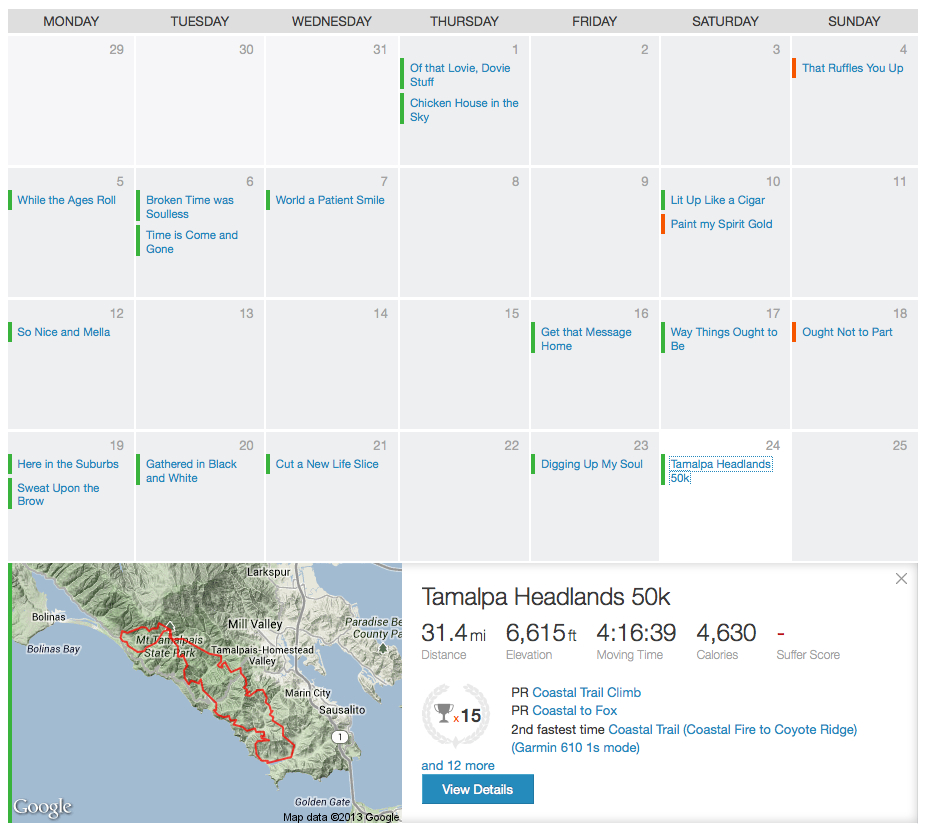
mucstrava2For the first half, I had two pieces of data available to me on my Garmin—race pace and race distance. I wanted to be hyper-aware of the 50mi/50k split at Heather Cutoff around mi16 and was grateful that it turned out to be so well marked. Then it was up Coast View to the Cardiac aid station and down the Dipsea to Stinson Beach for the most formidable climb of the day up Willow Camp, which I’d not had the pleasure of climbing before. Starting up Willow Camp my average pace was about 7:30/mi. I was pleased with that ’cause I knew I’d lose quite a bit on this bad boy. And by the time I summited, I was down to about a 8:06/mi average. I’d stayed in control, power-hiked here, ran what I could, and enjoyed the views overlooking Stinson.

I’d seen my Inside Trail team-mate, Chris Wehan, in Stinson Beach. He was out volunteering and having a good time. I asked him how far back the next guy was. He’d been following the action on UltraSportsLive.TV’s live feed. They’d given a bunch of the 50mi runners transponders so we could be tracked in real-time. Way cool. And I had a perfect little pocket for it on my vest too. Chris said that I had some good time on the next runner with a transponder. But, I was worried about runners, “flying under the radar,” who hadn’t been “chipped” at the start. Always race like the next guy’s two minutes up and the guy behind’s two minutes back. Keep plugging away…

With Willow Camp in the rear-view, the day was warming up. I’d had a few twinges in my right achilles earlier in the morning. I’d not had any problems with achilles this year so chalked it up to racing Ilsanjo and the fact I was running a 50-miler in the Headlands faster than I ever had before. Overall though, felt good. Chabot and Ilsanjo definitley seemed to be doing more good for me than ill.

Powered by gratitude, I cruised down Matt Davis Trail back to the Cardiac aid-station, I began dwelling on how much time/distance I’d lost being off course for a bit early on in the going. At the half, I switched over to my Garmin’s Virtual Pacer (VP), which I’d set for 8:45/mi (the existing course-record pace). I now was hovering around 10-13min ahead of my VP. That should be good, right? I finally made it to Cardiac and moved through as quickly and efficiently as I could. Two hundred yards passed Cardiac I realized I just forgot my drop-bag with the rest of my calories for the remaining 40% of the race. I had one gel left in my vest and a full bottle. Putting my metabolic efficiency to the test, I ran faster and ignored my Garmin’s vibration, telling me it was time to take calories. I was in ration mode, but relaxed and stepped on the gas, bounding down another fun section of trail.

Once I got back down to Muir Beach I was ready for some calories, for sure. No gels are permitted in the Headlands, so I loaded up on CLIF SHOT BLOKS and Coke. I actually ended up really liking the BLOKS for racing, especially in the second half of a race, since you can just keep popping these little guys in and let ’em dissolve. So, disaster averted!

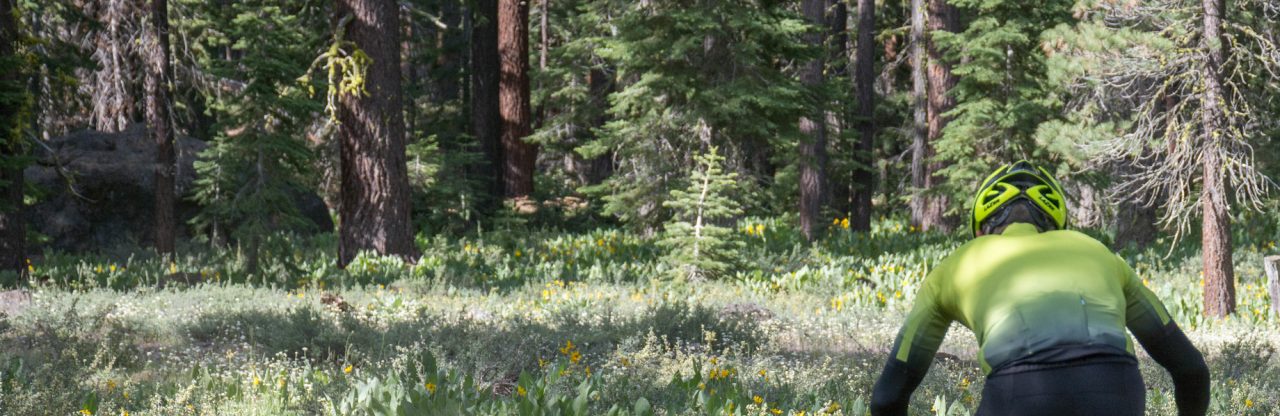
muc2All the way back up to Tennessee Valley, I was doing my best to prepare myself for the final, big climb up Marincello. I’ve gone up this climb numerous times during races, and it never fails to test one’s mental fortitude. Armed with a quote I recently heard in the trailer for the new movie, Unbroken, [in theaters Dec. 25th] stating, “If you can take it, you can make it,” I arrived to Tennessee Valley and vowed to myself I would not walk any part of this climb. Now I wouldn’t exactly call what I did do up Marincello, “running” per se, but I was able to use the above mountain biker as a nice carrot to keep me motivated. You take what the trail gives you. It wasn’t easy, but I kept the cadence quick, the steps short, and crested that sucker, feeling spent but excited to wrap this race up (but with the curious desire for the experience to never end).

By the time I finally got myself up Marincello, I was only about nine or ten minutes up on my arch nemesis (my Garmin’s Virtual Pacer). In my head, at that moment, it seemed like it wouldn’t be good enough. Unbroken‘s Louis Zamperini’s quote had all-too-quickly deflated into the less inspired, “Fake it until you make it,” as the body really started protesting the now 6+ hours of toil. At this point in the game, the body’s in charge and we’re just leaning against our limits and hoping the ol’ wheels stay on to the finish. Cadence. Cadence. Cadence. Relax…

Alta and SCA trails revealed a not-too-distant yet out-of-reach national monument as I reminded myself to find my yoga breath and keep on keepin’ on. Another fellow Hoka One One athlete, in the form of Ken Michel, running the 50k, gave me some much needed encouragement as I hobbled over the final rollers before the glorious left turn that would take us back to where we started the day some seven hours before—under the majestic Golden Gate Bridge, all downhill… which sounds more delightful as I write this than it did with 49 miles and 10,000′ of cumulative quad-crushing downhill in my legs.

You never know who’s going to come up from behind, ’cause it’s never over ’til its over in these ultrarunning contests. Work to that finish line. Earn every step. And then the body has your permission to completely seize up. I must’ve looked pretty bad, ’cause at the finish line volunteers actually asked if I need to be carried. Fake it ’til you make it.

Two final things I want to highlight about the Marin Ultra Challenge were 1.) how Inside Trail Racing allowed us to deposit our head-lamps at an aid-station once the sun came up and had them waiting for us at the finish, and 2.) the big sponges in buckets full of ice-water that were offered at aid-stations once it got warm—THAT WAS SO AWESOME! There were over 70 volunteers out there making this event happen and for them I’m super grateful.
1922523_10152017895331943_955238494_n
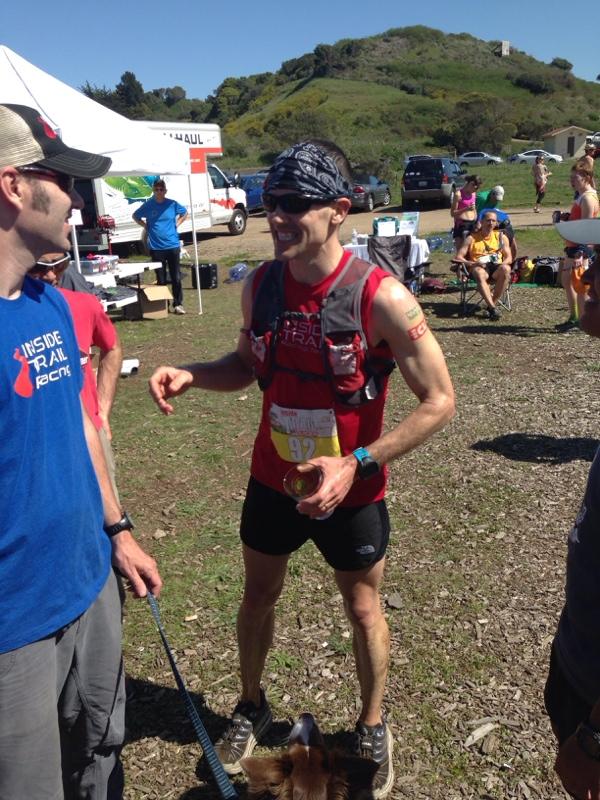
With super-human race director, Mr. Tim Stahler, riding some post-race euphoria.

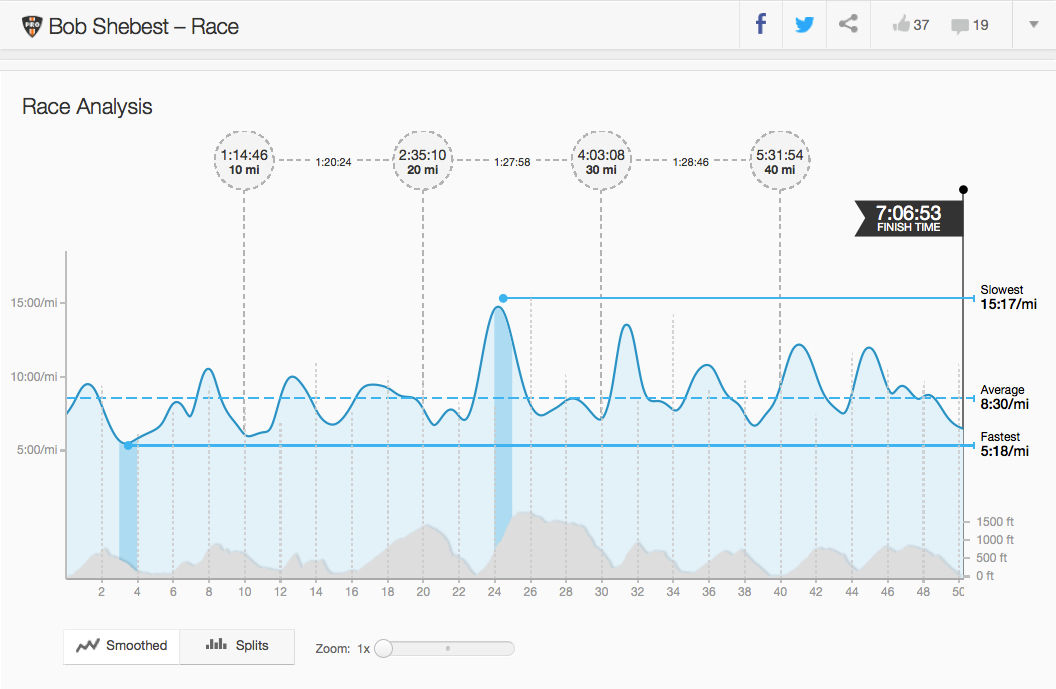
It was another existential battle of mind over body out there, on a course that still lingers in my mind and spirit (and probably body too). I was thrilled to see 7:07 (~8:30/mi avg pace) coming across the line, but I was most psyched about having executed my best mountainous 50mi event to date. The effort to do so does concern me because of the immense strain on the body. What doesn’t kill you…

As of today, now eight days post-MUC, I’ve still only jogged across a few fields with the dogs. Lake Sonoma’s in three weeks and I can either benefit from MUC or become injured coming back to training too fast. Running resumes tomorrow and I’m hopeful, after resting this week, cycling, massage, and yoga, that any niggles from MUC will have vanished. It might be akin to pulling a rabbit out of a hat, but I’m targeting 6:40 to 7:00 at Lake Sonoma here in three weeks. Ultrarunning gods willing, I’ll be able to pull it off. I did see a bobcat up close yesterday on a sweet, hilly road-ride. Ann Trason says that bobcat sightings are good luck. I’ll take that, and run with it. >>> 😀
MUCstrava

“There is No Spoon.”

“Something I have always understood is that physical activity is key to a calm mind.”  -Simon Whitfield, Olympic Gold Medalist

three-dog-yogaMy New Year’s resolution? Have more awareness, in sport and in life in general. Surely, trail-running encourages present-mindedness, but whenever I take a yoga class, I walk away feeling renewed in a different way. I’m going on a bit of a “yoga expedition” this year, a little journey into my self and see what I can bring back and use on the trail.

This time of year, yoga’s a great alternative to slogging out dark, cold morning miles in the woods. I’m excited to incorporate yoga into my ultrarunning training this year as I have this strong sense that it will encourage further performance gains. Just taking four power yoga classes over the last week has influenced my running and teaching in subtle but noticeable ways. In addition to yoga, great sleep, good foods, plenty ‘o water, and omitting daily toxins like sugar, caffeine, and alcohol probably contribute to this feeling of greater equanimity. Simple is beautiful—just hop on your mat, listen to your instructor, and an hour’s over before you know it. Feel great all day, what’s not to love?

My first introduction to yoga came in 2010, about the time I got bit by the ultrarunning bug. Serenditously, I began to draw parallels between the two. On the mat or on the trail, there is no place to hide from yourself. And in order to get the most out of yourself in either context, you have to clear your mind, be present, breathe, and try your best to go with the flow.

My yoga teacher at Three Dog Yoga in Santa Rosa, Anna, was instructing during a power class just last week about the practical nature of yoga. Practical in the sense of being present, in the moment and how that serves us so well, on and off the mat. Yoga, as I understand it, is a practice, the proverbial journey with no destination. Reminds me of Joan Benoit Samuelson’s quote, “There is no finish line.” All that matters is what we’re doing in the moment, just like ultrarunning. Building presence of mind, then, is a skill we can work on and improve. Then we can take that skill and apply it to any area of our lives. For me, I take what I’m learning in yoga right into the classroom, into my coaching, my running, and my other important life roles.

Beyond presence of mind, yoga serves to stretch and strengthen the body. Yoga practice gets us in touch with our breathing. It also stretches and strengthens the mind by asking us to hold many challenging poses, especially challenging for notoriously tight muscled runners. All of these benefits, of course, are practical needs of any endurance athlete.

Candice Burt, 2nd place female at the 1/20/14 HURT 100mi trail run and new Tahoe Rim 200 Race Director, says that yoga changed her life. Here’s what she recently told Ultra Runner Podcast: the day after running 100mi at HURT:

“[Yoga’s] more of a perspective change, slowing down and trying being present in the moment. [It] helps you get to a clearer place. The breathing’s made me really present, it’s really helped me with my running. During the race yesterday, there were a lot of times when I started panicking over how many more miles were left or the next hill I had to climb. When I felt that panic, I would breathe in deep like I did in yoga and that would bring this sense of calm within me. I wouldn’t have been able to bring that calmness out if I hadn’t already practiced it through the yoga poses because a lot of the poses put you under a good deal of stress. You’re body learns how to deal with that, that fear, in the moment.”

Jumping back into ultrarunning from triathlon in 2013, I just ran, All. Year. Long. There wasn’t any strengthening, little stretching, and no sessions specifically attending to focused breathing. By December, I was feeling it. I didn’t just need to take a month off from running, I really wanted to. It’s never just about the body, the mind’s along for the ride too. So, I’m thinking of yoga as my specific mental conditioning training. When I studied sport psychology in graduate school, we were taught sport is 100% mental as well as 100% physical. They are different realms that need to be attended to individually. Surely, this is even more true for ultrarunning. Like I tell my students, the mind is a muscle, you don’t work it out by doing the homework (training) it’s just not gonna be there for you on test (race) day.

I’m always tinkering with my typical training week. I’m a creature of habit and seem to be happiest when I’m engrossed in activities that are most meaningful to me; finding time for quality run training being one example. This year I’m focused on building my two greatest limiters: speed in 50k and 50mi events, and climbing across the board. So, in order to accomodate more intense sessions, I’m dropping my weekly volume a bit. Building for two weeks—versus three—and then taking a recovery week will be another big change. It’s that recovery week that I’m most jazzed about.

training
click to enlarge

I feel this “Two On—One Off” approach to training will keep me healthy while steadily progressing. As is traditional in a run recovery week, I’ll drop the running volume considerably, while maintaining integrity to the most important sessions: two hill sessions and a faster, mid-week road run. I cut the intensity during these sessions by about 40-50% in the recovery week so that I feel like I’m truly recovering while staying sharp. Enter yoga.

Recovery weeks, now, will not only be about recovery from running, but strengthening the body (and mind) to more effectively cope with subsequent run training. I believe yoga can even keep the “flame to train” burning bright. ‘Cause if it’s not fun, we shouldn’t be out there slogging away, right?

It’s gonna be another fun year in the woods, and on the mat! I’ll be writing at least three more follow up posts on yoga’s influence on my ultrarunning training and racing. I have a whole slew of ideas rattling away in my head. Inspiration is everywhere.

2014: Faces & Places

cork2014 is here! And if you remember your basic place values from math, you’ll see that there’s a 4 in the one’s place, which means yours truly is another decade older. I arrive to the Masters ranks this year people. My body’s feelin’ its odometer reading a bit, but overall I still feel much younger than my personal chronology. No doubt, there’s more stretching going on, more foam-rolling, beefin’ up the strength training, Yeah, hitting some yoga classes, cross-training more strategically, racing less, eating optimally (?), drinking a lot more water (vs. IPAs), minimizing the carbohydrate and sugars, sleeping more, getting massage, and uh, (gulp) even got off the coffee in December. All for what?! For the love of the game of course!

I’m not taking for granted the opportunity to improve on 2013, so I’m putting my best foot forward here, pulling out all the stops, and hoping for the best. Let the chips fall where they may! Lots to be grateful for in life, including a supportive wife, great jobs, friends, sponsors, supporters, events, and starting my fifth decade on this little ball that twirls.

itrlogoVery excited to be on the Inside Trail Racing team once again for 2014. Race Director, Tim Stahler’s tireless dedication to masterminding the best trail-running events around is crazy impressive. We’ve got a great team with a lot of fresh, fly talent, including ultra fun young guns: Luke Garten, Kimberly O’Donnell, Chris Wehan, and Steve Arntson. Check out the ITR calendar and choose among many wonderful events in beautiful places. I’ll hope to see you out there soon!

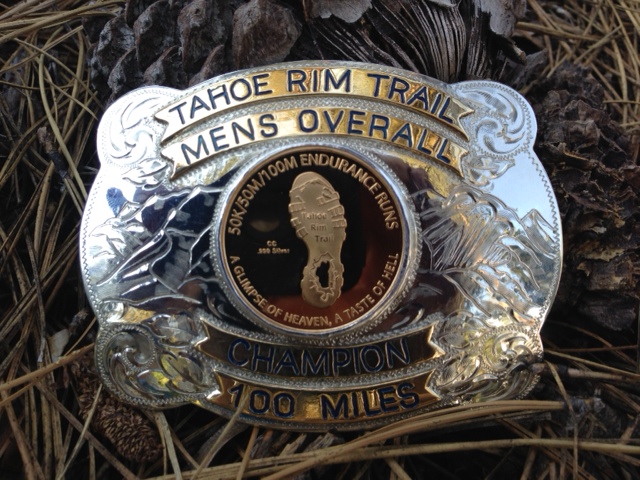
photo-7Last year this time, I wouldn’t have seriously considered running in a pair of Hokas. Then, in May I had my come-to-Jesus-moment. I got my first pair and immediately noticed I could run downhill quicker since the shoe absorbs so much shock. Later that month I picked up a 2nd place at Silver State 50-miler and loved how the shoe performed on that technical, demanding course. So, I made the decision to use them at Tahoe Rim Trail 100-miler in July and never thought about my feet for the 18 hours I was racing. If you’re going to sustain the ultra-running lifestyle, you’ve got to take care of yourself, protect yourself, insulate yourself against pulverizing nature of these long-@$$ events. One company’s doing it the best:  Hoka One One.

With the support of Hoka, I’m looking forward to being able to travel a bit more, and get out to some new races in new places here in California and Oregon, all the while being stoked to perform at my very best. I’ll now have more breathing room to take better care of myself and be able to do those things I know I should be doing, like getting that occasional massage, for example. It sounds like there’s a new team kit in the works so  lookin’ forward to flying the Hoka colors with my teammates, Karl Meltzer, Jen Benna, Dave Mackey, course-record holder at the Quad Dipsea, and just-recently signed, Sage Canaday, 2013 champ and course-record holder at Lake Sonoma 50-miler. A rising tide lifts all ships!

photo(1)I’ve always admired the staff at Heart-n-Sole Sports in Santa Rosa. These guys have been athletes their whole lives and have accomplished so much in the world of running. They also support area high school’s track and cross-country programs. When I was petitioning Hoka to sponsor me, Kenny Brown at Heart-n-Sole helped me get onboard. It wouldn’t have happened otherwise. I’m sending as many people as I can into H&S to strap on some Hokas and hit the trails more confident than ever. Now, if Hoka could just make shoes fast enough!

H&S is hosting an Ultra Clinic on January 30th from 7pm to 8:30. The panel of speakers includes USATF Masters Female Ultrarunner of the Year, Suzanna Bon, also Todd Bertolone, a seasoned ultra-endurance athlete who’s running the Western States 100 this year, along with yours truly, offering my two cents on topics including training for ultras, nutrition/hydration, and the mental game. Should be a fun evening!

clifWow, this year I’m celebrating a decade being with CLIF Bar. They’ve been helpful on all fronts of my life. As an triathlete and now as an ultrarunner, they’ve kept me fueled with CLIF bars, Shots, and Blocks as well as a stream of great swag. As a coach, they’ve helped me put quality sports nutrition products into the hands and bellies of athletes I coach. And as a teacher, Clif Bar has sponsored my school’s Spartan Stampede 3k Fun Run for about as long as I’ve been with them. CLIF is the leader in organic and nutrition foods. Plus, they make some good wines too!

three-dog-yogaEinstein said it best, “The definition of insanity is doing things the same way and expecting different results.” With that in mind I’ve pondered what things I’ll change and/or integrate into my ultrarunning training and recovery practice this year. [Re]enter—yoga.

In 2010 my wife worked part-time at Three Dog Yoga and I soon found myself on a yoga mat for the very first time. That was my second season as an ultrarunner. I made a lot of connections between the yoga practice and the mentally demanding nature of ultrarunning events, especially the final third of an ultra. For both yoga and ultrarunning, you need focus and a strong sense of being able to simply be comfortable with discomfort. You need to relax and breathe. You need to have a strong body. Your mind needs to be clear. You need balance. When these things are in check, you are free to flow >>> down the trail…

For 2014, I’m bringing yoga back into my training by incorporating three power classes into my recovery weeks, which are going to come more often this season. Training is a case of stress and rest, and repeat. It’s during that break from running that yoga serves to strengthen both body and mind, while stretching both in the process. Granted, this will be an exploration and I’ll be documenting my findings with a quarterly post. I know my body will reap the results of the practice, but I’m most curious about how I’ll be able to bring this yoga practice into the competitive arena, staying in the flow, and closing strong over the final miles of a 50k, 50mi, 100k, and 100mi.

nuyaIt was fun seeing Nuya out at Destination Race’s Healdsburg Half-Marathon in October. I ran it with Amanda. That event’s a blast since Subaru owners get the VIP treatment; Subaru being one of the main sponsors. Nuya had a cool booth set up and head honcho for Nuya, Ted Neal, was out there getting packets—and swag—into people’s hands. I ran back to the Subaru VIP brunch with some “perfectly natural hydration” samples on tables to accompany what was quite a nice post-race spread! So this is what Lexus owners must experience everywhere they go; first-class service.

Coconut water’s exploded on the scene as the great re-hydrator. I’ve consumed liter upon liter, especially during warmer weather. So now after long stuff I can just rip open a packet of Nuya, mix it up in water bottle, and I have a tasty, post-race beverage. Hydrate!!

stravarunThe workout didn’t happen unless it’s on Strava, right? As a math and science teacher, I sometimes share Strava stuff with my students. I’ll share graphs and charts on everything from heart-rate data to elevation profiles. There’s so much in there to connnect with what we’re studying throughout the year. Strava’s innovative and keeps making the user experience even more fun.

In 2013, Strava tallied for me some 2700mi o’ running with 450k’ of elevation gain. I don’t know if that’s a good or a bad thing but I think, in general, I maintained a good balance with it and didn’t overdo it (too much) on any occasion. It’s easy for me to obsess about hitting higher mileage goals for sure, especially during those d*mn monthly Challenges where you’re “competing” against everyone else from around the world to see who can rack up the most volume over four weeks.

Like I tell my students, Strava’s like Facebook for athletes (and spares our Facebook friends from always having to see our latest long run stats). I enjoy maintaining connections with my fellow outdoorsman. It’s cool following some of the best in the sport as well as your buddies (who may or not be among the best in the sport!). Through Strava, it’s great getting another perspective on athletes I coach too. It’s great to be able to interact with former students who are now getting into running and/or cycling. There’s even a few parents of kids who I’m currently teaching on Strava. It’s like some kind of… social network!

Blog Post Transition: I’m now going to jabber on about my key events for 2014

intermisionsnagitdownarrow

racing
Sadly, Silver State 50/50’s not on the list.

It might be January now, with short days and cold temps, but soon enough it’ll be time to pin on that glorious race number and get after it on the trails. Here’s a handful of ultrarunning events I’m most looking forward to.

mucI missed this one last June because I had my head in the sand in preparation for Tahoe Rim Trail 100. Fortunately for me Marin Ultra Challenge will be held in March this year! This one’s right up my alley too, with 11,000′ of elevation gain in the Marin Headlands and Mt. Tam. What’s not to like?! Epic views of the Golden Gate Bridge, great running along Coastal Trail, Miwok, Dipsea Trail, Willow Camp, Pirate’s Cove, Muir Beach, Cardiac Hill, Stinson Beach, Muir Woods, and Middle Green Gulch. I’ll probably get a 50k in before I toe the line at MUC, just to get some iron back in the legs.

annadelSuper excited to have the opportunity to run the Annadel Half-Marathon this year. For one reason or another, I haven’t been able to run since 2010 where I took 2nd in a time of 1:28. Inspired and intrigued to try throwing in some shorter, faster stuff this year (when it fits) to try and bolster some speed in the longer stuff. Annadel’s only seven days out from Annadel so it could either help or hinder. So, in anticipation of this back-to-backer, I’m doing a lot more speed work in my training, cutting the volume some, doing more strength work, so I can have my d*mn cake (and eat it too!). Also great that Annadel doesn’t fall on the same weekend as Lake Sonoma, which was the case last year. Always nice to race local and this one, like Lake Sonoma, has a special place in my cardiac muscle.

LS50Wasn’t it just 2010 and I was 3rd overall here, just in front of Timmy Olson? My how times change! Last year I ran over 20min faster than in ’10 and ended up down the list in 20th. Lake Sonoma 50 was a turning point in 2013 though; I learned a lot in that one. I’m happy to find, at my ripe young age, that the existential fire to improve still burns. Doing my first trip around the Warm Springs loop last weekend was simply delightful. And for some reason I have it in my head I can crack that 6:50 (6:40?!!) mark at this race. I know how to nail a marathon, a 50k, and the 100, but that 50miler, for me, is a “fun for a while” but ultimately frustrating distance. So hopefully, my tactical preparation this spring will pay off. Top-10’s the goal.

bishopA new race in a new place! I was considering doing Silver State 50 again since I love how tough that race is but Bishop High Sierra 100k popped up as another Inside Trail event, and on the same weekend as SS50. Timing is everything and I’m a stickler about race placement on the calender. Running Bishop allows sufficient time to recover from Lake Sonoma. It gives me 100k at elevation, to have in my legs for TRT100 in July, which I didn’t have last year, though SS50 is also ideal prep for TRT. And the timing’s such that I’ll have two full weeks off at the end of May, to enjoy my students, before finishing up school and jumping, full throttle, into TRT training. Perfect.

TRTAll trails lead to Tahoe Rim Trail 100 in July. This distance is the one that comes most naturally to me, as it seems appeals to all my passions as a runner. I’ve run three 100s and all three about been on these glorious trails in Tahoe. I have be strategic with the placing of my hundred so that I set myself up for success. Having the summer months off from teaching allows me to train optimally for a 100mi run, and moveover, really savor that June preparation. I don’t know what I enjoy more, the June prep or the race itself. No doubt, the preparation makes or breaks the race. Gotta respect the distance!

TRT 2013 was a pretty hot one and 2014 could easily be roasting again giving the winter we’re having. All those years racing Ironmans, with four trips to Kona, suffering on that infernal marathon, really seem to lend themselves well to my racing in the heat. Last year, I found I really liked it (except the vomiting in Red House). The beauty, the distance at elevation, the cumulative vertical gain, the high temps, and the competition, all make for a great, great day on those pristine trails. An improvement of just 3% would land me around that 17:30 mark, good enough for a new course-record. We’ll see what happens this July!

P2P_logos_color-01Since the 100miler is my fave distance, and I’ve only ever run TRT, I thought it high time to try another 100, one that also captures my imagination, in a beautiful place, and won’t pull me out of the classroom for too long. Pine to Palm is just “right up the road” in southern Oregon. I figure, last year I was able to bounce back and “race” Headlands 50k a month after TRT, sooooo, if I rest for a few weeks post TRT, listen to my body, and do a few weeks build, I should, hypothetically, be able to pull off a second hundred. I mean, look what Ian Sharman did last year. I’m not interested in any Grand Slam business, just the opportunity to take my show on the road to a different 100 in a different and beautiful place. Tim Olsen’s record looks pretty stout considering the vertical profile and I hear that the course has changed since his CR too. Anyway, we’ll see what I can do up there. Maybe I can get Hal to pace me.

quadYeah, I’ve always wanted to run one of the Dipsea events. I was signed up for the Double Dipsea in 2008 but DNS because something was hurting. But the real reason was Amanda and I were enjoying the house we’d rented in Stinson too much. It turned out to be an exceptionally warm weekend at Stinson and we were right on the beach. 80deg and sunny. I did look up at the hills a fair amount, through my beer-colored glasses that is.

I certainly don’t imagine myself in the same category with Dave Mackey but Dave continues to pull off some amazing ultrarunning feats as a veteran Masters runner. His course-record win at Quad Dipsea was as amazing at his top-10 finish at North Face Endurance Challenge 50mi only a week later. I couldn’t believe it. His race-report on Quad shed some light on to how he pulled it off. I’ve taken notes. Looks like Mackey’s got a good thing going in Colorado with a good group of guys doing some hard hill running. Yep, that’s what it takes.

So, I’ve got the 2013 season in my legs. I’m ramping up the hill work this year. As a precursor to the possibility of doing “DD” (Dave’s Double = Quad + NFEC, I’m going to see how I bounce back from Annadel Half-Marathon, a week out from Lake Sonoma. Then, depending how things are looking after Pine-to-Palm, do something like two back-to-back weekends of 50k’s or something like that to steel the legs for DD. We’ll see, it could happen or it couldn’t; the body decides. Ultimately, I want to do Quad but not at the expense of not doing—or doing poorly at—NFEC in early December.

nfecUh yes, trying to stretch the season out for just… one… more… race. And what a fine event this is. Just as competive as Lake Sonoma 50 with all the difficulty, but unique all the same. The aim at my fifth North Face Endurance Challenge will be to integrate all that I’ve learned over 2014, race my own race, and continue to improve on my placing here. I’ve gotten a little quicker every time. I think I’ve got a good bead on how I can consistently run well under 7hrs for 50miles on these demanding courses. Yeah, we’ll see Shebest. You’re not gonna get there walkin’ those dogs around town.

 photo(3)2014 Training Log

North Face Endurance Challenge

2013 marks my fourth consecutive North Face Endurance Challenge (NFEC). I’m pretty darn lucky to have two such fiercely competitive events—Lake Sonoma 50 and NFEC—right here in my North Bay “backyard.” It’s quite a thrill, and downright humbling, to [chase] the best in the sport. From 2010 to 2011 I managed to knock off 9% off my finishing time. In 2012, we saw the course shortened/rerouted due to excessive rains though I felt I continued to make progress. Juxtaposing 2011 to this year, I’ve managed to carve out another modest 4% gain, going about 20min quicker over this roller-coastal course. What a ride it is…

2013NF50
Photo credit – Galen Burrell

Coming off Dick Collins Firetrails 50, I got some rest and ramped up the training for a few weeks before my Thanksgiving break, navigating that deviation in routine the best one can. Race week was business as usual, back in the classroom, and I even managed to get my legs up at lunch on Thursday and Friday before the race.

Race morning went off without a hitch. Got to the start an hour early, bundled up to keep the chill off. Cracked the seal on a fresh port-o-john, then had an espresso about 10min out and it was time to go. I had heart-rate zones of 141-147 set into my Garmin with the objective of running at an average HR of 144bpm for the entire event. The opening pace felt very manageable, much more so than any of my other NFEC starts. Good sign!

Once the first climb started, I characteristically fell back and stayed within myself, enjoying the effort through the darkness and the familiar string of lights in front and behind. I did wish that I’d chosen to wear my Petzl NAO instead of my old Petzl head torch since the old one’s beam left me fearful I’d roll an ankle. I just didn’t want to carry the heavier lamp the rest of the day, or lose the pricey NAO. Regardless, I trusted the stability my Hoka’s provide and rode it out until dawn. I’m grateful I didn’t kiss the dirt. I guess this could be called “faith-based running.”

Feeling good and average HR still down at around 140, I decided to work harder on the first flat section around 5-6mi and bridged up to the main pack with a few 5:45 miles. Bingo! All my conditioning as a road-runner continues to be a strength and I took comfort running with others versus going it alone in the dark. But soon enough it started to pitch up again, gradually and the pack slowly left me behind. I watched, and paced, wishing I had half of Kilian’s VO2Max. That was when Rob Krar shouldered up next to me, passed, with his beam directed toward his prey up front. The thought did cross my mind, as I watched him float up behind the pack, that he was executing well, and might just go on to win, which of course is just what he did. One. Solid. Dude.

Dave Mackey and Mike Wardian came by next. I chatted with Dave for a bit and began to settle in for the long haul. My experience at this race inevitably mirrors my reality in road marathons, where running around 2:40 for 26.2, I’m often in no-man’s-land, increasingly out of reach of the front-runners, and well ahead of the larger mass of 3-hour folks. It’s tough goin’ when you don’t have a carrot ahead and/or someone back keeping you honest.

So, we just keep putting one foot in front of the other. Coming through 30-35, the shine was wearing off, as it will, but I put on some tunes and found some flow though my weary legs were no longer able to push the HR up into the 140s. F#%k it. I just wanted to see another runner. And one appeared around mile 40 in the form of Mike Wardian, who, curiously materialized from behind. We couldn’t figure out where I’d passed him, but we ran together for a few miles, until the Tennessee Valley Aid station where I lingered just a bit too long and wasn’t able to bridge the gap back up to him. Still, his presence over the final 10 helped me out a lot and got my head back in the game. Espirit de corps!

It was inspiring not only seeing the who’s-who-of-ultrarunning out there in the thick of the race but also the who’s-who-of-ultrarunning out there spectating and cheering us on. Kind of surreal, running up from Stinson, seeing Kilian Jornet and his Salomon buddies on the trail, then later, struggling up some slippery, god-forsaken stairs, seeing another legend in Geoff Roes. At NFEC there’s certainly no shortage of inspiration. Even better is seein’ friends at aid stations and random places along the way. When you’re dying it’s good to have a reason to smile, especially since you-know-that-they-know just what you’re dealin’ with.

Post-race, I got some grub, couldn’t stay warm and soon hobbled back to my car’s heated seats. I was scheduled for jury duty on Monday though I’ve managed to dodge that bullet today, and now tomorrow, though I’m still on call for Wednesday…

Now, the long look ahead into 2014. I’ve put in for Miwok 100k in May. Hopefully, my luck holds out this week and I manage to snag one of those lottery slots. Prior to Miwok, looking forward to some Inside Trail Racing events, including Marin Ultra Challenge in March. After NFEC, I’m thinking hard about doing Lake Sonoma again, since I really enjoy the opportunity to run with the big boys. The “Spring 50s” will hopefully set me up nicely for a return to what I feel’s my true calling in ultrarunning—the 100-miler. With June to prepare well, being off from teaching, I’ll return to Tahoe Rim Trail 100 in July and try to shave another 3% off my 2013 effort of 18:04. That’d put me down around 17:30, under the existing course-record. I was getting concerned about turning 40 next year, until I’ve witnessed what folks like Mackey and Wardian have been up to lately. Following these guys’ lead, my plan for 2014 is to use some strategic racing to put more “tiger in the cat.”

Now, I’m taking four weeks off from running. My right hip continues to be a bother and the downtime will surely be of benefit. I’m even getting a massage on Thursday. That should be an interesting experience, since I’ve never used massage in my training before. Hey, that’s what us Masters guys gotta do, right?

Happy Holidays and I hope the lottery gods smile down upon you. Cheers for beers.

Coastal 50k & Hoka One One

hoka

When friend, Victor Ballesteros informed me earlier in the week that he was going to postpone his Tahoe Rim Trail 165mi speed-through, my wheels started turning. I’d planned on running with him for 30-some miles on Saturday (today), then cheering on my athletes and friends at Ironman Lake Tahoe on Sunday. So with the speed-through attempt out, I went to the interwebs to see if I could find a race on Saturday (c’mon, what the h*ck do you expect?). And wouldn’t you know it, Coastal Trail Runs had one locked and loaded for me: Coastal 50k. I’d done this one last year, with lackluster results, coming in about a half-hour behind Bahama Mama Leigh Schmitt.

chasingLeigh2012
Running with Leigh at last year’s Coastal 50k. Photo credit – Coastal Trail Runs

Coastal 50k’s a point-to-point race, from Stinson Beach, meandering back down to where I’d parked my car in the morning at Rodeo Beach. I got there with about 15min to spare before the shuttle to the start departed. When faced with two busses from which to choose, I instinctually selected the one in front, and saw it had room for another scrawny runner. Onboard I soon spied perennial front-runner, Jorge Maravilla. On the winding, twisting, bus-ride up to Stinson, conversation waned and the bus grew quiet as folks dealt with their waves of nausea. I actually broke out into a sweat! So, I swapped positiions with Jorge and cracked the window since I was about to bomb. Just then, we arrived at Stinson Beach. There is a God, and he is benevolent.

Shaking off the effects of motion sickness, I ran into fellow Inside Trail Racing Team member, Chris Wehan about 15min before the start. He introduced me to his buddy, Steve Arntson, and I intuitively knew ol’ Steve (actually young Steve) was going to be a threat, since he looked damn lean, like he could float right up the climbs.

Leigh won Coastal 50k in 2011 and 2012. His course-record time was 4:04. I had set my Garmin’s Virtual Pacer to a 4:04 50k. And then I found out that Jorge was racing. Knowing a 3:53 50k might be a bit beyond my grasp, all things rationally considered, I dialed in a 3:59:57 (7:44/mi) into my trusty Virtual Pacer. I figured I was in sub-4hr shape since I did a crash-course taper this week after having done some good training over the last four weeks, including one week at 125mi w/ about 20,000′ of gain.

map50k

Off we went, Jorge was out of sight for most of the race, but I’d occasionally spy a glimpse of him on some of the meandering switchback over the duration. My race was consumed with dicing it up with Chris Wehan’s speedy buddy, Steve (just as I brilliantly deduced pre-race). Steve would catch me on the climbs and I’d do my best to open up a gap on the downs—downhill running being my natural strength in ultrarunning (though I wish it were climbing!). It rained on us most of the race and it was foggier than San Francisco on a rainy day. I embraced the conditions and ran, again for the distance, sans water bottle or vest or any other cumbersome accoutrements. I love it. Just took a few cups of water at aid stations. I consumed about 1200 calories, mostly from Clif Shot, over the distance.

slipping
Sliding around a 90deg turn. Photo credit – Tan L.

Coastal 50k’s final significant descent and climb is on a trail-then-road that dips under the Golden Gate Bridge. At the final aid station at the bottom, I found myself a Coke on the table, cracked that puppy open, poured [tiny] Dixie Cup after Dixie Cup after Dixie Cup, then turned around and headed back up the road then to more god-forsaken wood stairs until, when arriving at the top, you’re greeted to the delightful switch from pink ribbon to orange [!!!], indicating the road home. I’d worked extra hard on that last climb to ensure I had a gap on Steve, and since I was only down 2min or so on Jorge, I thought “What the h*ll? Maybe I can catch him!”

steve arnt
Steve Arntson. Photo credit – Tan L.

I’d been behind my sub-4hr Virtual Pacer right up to the top of the climb and found myself only down by 2min, thus offering more incentive to work hard on the relative downhill/flat to the finish. It felt good to finally see that thing turn over from “Behind” to “Ahead,” knowing I’d hit my sub-4hr time-target on this demanding course.

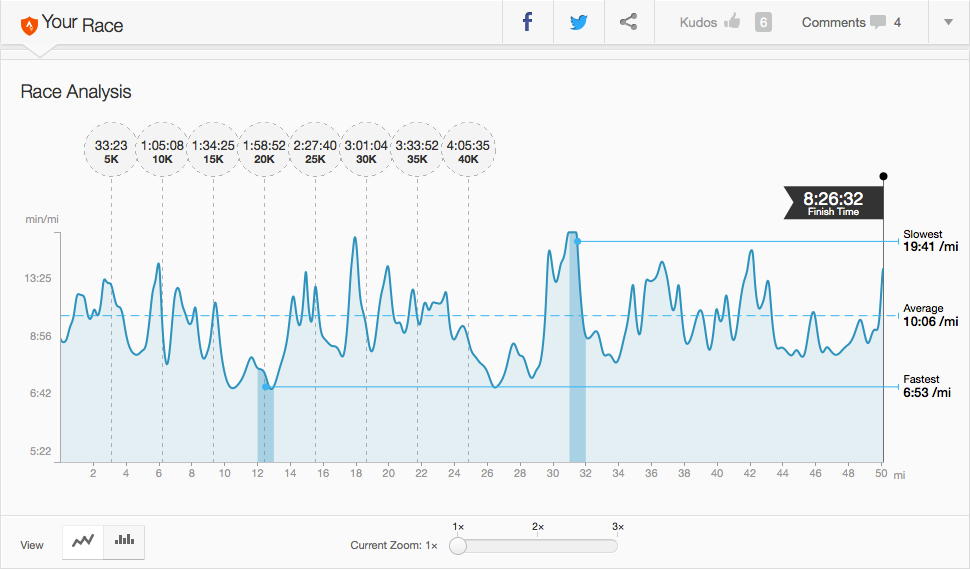
race analysis

photo-2
Hoka One One – Stinson EVO – great for trail-running

Despite my very best efforts to do so, I couldn’t reel in ol’ Jorge. No worries, it’s all in good fun and l knew, without him as a rabbit, I’d likely not broken 4. So, final time was 3:56, a new personal best for 50k in the Marin Headlands! And this, my first race as a Hoka One One athlete! Hoka running shoes continue to serve me well, providing incredibly solid protection for my feet, saving my body from a lot of the incessant pounding, while allowing me to get a little krazy on the downhills! >>> 😀

Apparently there’s something to this whole training thing too. You do more of it, and, it seems… you get faster. Of course the trick is staying healthy and it’s probably a good idea to work on one’s durability so one can stay healthy. Moreover, working to balance the equation: Training = Work + Rest. T=W+R has likely been my best tool in my injury-free status these last 14 years (let’s knock on some wood for superstition’s sake).

My bulldog and I really like Hoka’s “Stinson EVO” for trail running but we’re also pretty jazzed about Hoka’s “Bondi-Speed” as well. Look at those flash colors! Maximalist is the new minimalist. And if you’re an old dog with a lot of miles on you, man, Hoka’s the way to go! I’ve done more miles this year, seen a two HOUR improvement on my Tahoe Rim Trail 100-mile time, and keep getting faster, even at the “short” stuff. I’d suggest introducing a pair into your rotation like I did in May this year. You might just find you’re running in them more an more. More miles = more smiles.  😀

photo-3
Hoka One One – Bondi Speed – great for road-running and triathlon

h+s

I’d like to take this opportunity to express my gratitude to Kenny Brown at Heart-n-Sole Sports in Santa Rosa, for helping put me in contact with Hoka One One. Without him, I don’t think I’d have been able to pull it off alone. Heart-n-Sole is Sonoma County’s Hoka hook-up. Get in and see them today!!

photo-1

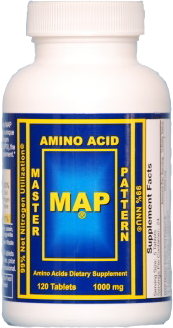
Along with Hoka, Master Amino Pattern (MAP) continues to serve me well in the recovery department. I took 10 tablets this morning pre-race and another 10 tablets post-race (this is suggested dosage for my body weight). Admittedly, the sh*t’s expensive, but remember, I can get it to you for $37/bottle! Contact me and let me know how many bottles you’d like. Yes, you pick up the small shipping fee. More information on MAP here:

Master Amino Pattern

Spending the night at the in-laws this evening, then up to Squaw Valley in Lake Tahoe tomorrow to watch the inaugural Ironman Lake Tahoe go down. Many Point Positive athletes racing along with many friends. I’ll be out on the run course with cowbell and foam finger, sporting my new Bondi-Speeds. I expect to see a lot of triathletes in Hokas, but just wait ’til next year… They’re gonna be everywear!!  😉

IMLTSo, an event-filled weekend. I might need more MAP to get me through it. I’ll be excited to get back home to Amanda, who’s a single mom to two bad, bad bullies this weekend…

photo
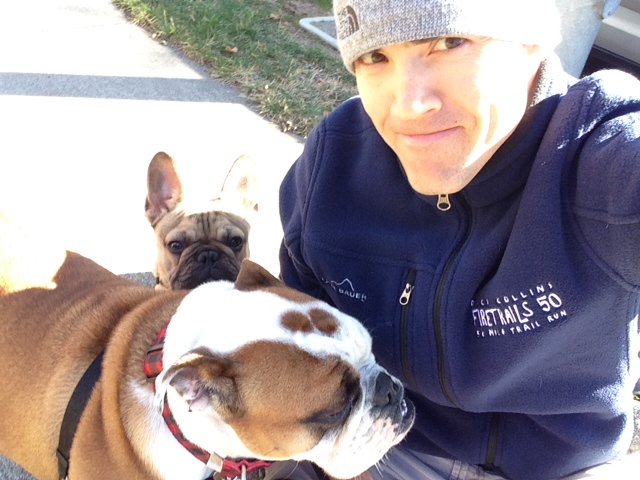
Ruby’s English and Sam’s French.

Back to School

h50klogo

Fun week last week! Started back to school on Tuesday, in my 9th year teaching math-n-science to sixth graders at Windsor Middle School. Learning names, establishing routines, and basically just getting back into the swing of things with teaching. I was looking for the time between Tahoe Rim Trail 100 and this race at Headlands 50k as a major transition phase in the year. When I signed up earlier in the year, I’d anticipated being motivated to jump back into training a bit earlier and with more gusto than I actually had since TRT in July. Still, just listening to my body allowed me to run well at Headlands, all things considered.

So, this C-priority race represented the official breaking-the seal-on-the-fall-trail-running-season. After having the same old problems in training this month with my Garmin 910XT’s heart-rate monitor, I just decided to ditch it and go down to Headlands and just run by feel, and keep this one simply relaxed and fun, since I was basically going off fitness I’d established in June and July. So, no HRM, and also, no water bottle, which was a first for me in a 50k. I’ve always wanted to run a hard 50k trail-run with no bottle. So, looking at the weather forecast, I figured what the hay, I’ll do it. And, as it turns out, it wasn’t a big deal at all. I love running unencumbered and the time I took to drink at aid stations was about the same time it took for guys around me to fill their bottles. I was getting down about two cups of water at each aid station. Toward the end, one of those cups was sports drink, and then cola. A successful experiment. I’ll definitely do it again for 50k, when the temps cooperate of course. Now, I’m still trying to figure out if I have the cojones to try it for a cool 50-miler… Maybe not…

After the start of Headlands, enthusiastic speedster Alex Varner, was soon out of sight and it seemed a race for 2nd. There were a lot of us together for quite a while over the first half of the race. I felt I could easily end up in 5th or 6th. Since I had zero idea where my fitness was but knew I was likely not going to be as fast as I was earlier in the year when I last went under four hours for 50k, I had looked up Leigh Schmitt’s winning time from last year and found it was 4:12—about 8:07/mi pace. Thus, I set my Garmin’s Virtual Pacer to 8:07 and went to work, stayed smooth, and really tried to enjoy the ride.

I guess I felt as expected, neither superhuman nor too terribly out of shape. The climbs felt a little harder than I’d like but the downs were really coming easy and I was bombing them in my trusty Hokas. I continue to love these shoes for all the protection they offer on rocky courses with a lot of descending. I’d save heart-beats on the climbs and just motor on the downhills. Good, good fun!

Somewhere around 2:30 in, I’d been concentrating on keeping the power on and basically just working my ass off to put a gap between me and whoever was behind—due diligence. As we were getting back north on the Dipsea Trail, I was surprised and not too happy to hear someone coming up from behind. I pushed a bit harder. Still there. Who IS that?, I thought. Finally, I turn around to see Jon Olsen, who was running a smart race and would soon overtake me. Anyway, I have a lot of respect for Jon and was pleased to have someone to now work with a bit. That is, before he would inevitably drop me.

I probably kept Jon in sight for some 20min or so and it was sweet running just working hard and giving chase on those delightful trails. I stayed with him to Stinson Beach where I was about even with virtual Leigh Schmitt. But, by the time the stairs and ladder climbs had had their way with me, I was some 10min down on virtual Leigh. Back to work to the finish. Since I wasn’t looking at distance at all during the race, and just virtual pacer and race-time, the miles seemed to go by quick. The sensation also likely inspired by the lingering effects of a long day running 100mi just a month ago. Anyway, it was nice to have the miles not weigh heavily upon my mind. But, they ran out before I could get all my time back, and by the finish, I was about 5min back on virtual Leigh. Had I just kept up with him I may have stayed in front of Olsen for 2nd.

Varner, with a new course record at 3:41, was in another zip-code by the finish. I’ve since read he was 26th at the Boston Marathon this year with a time of 2:21. So, with my best at Boston being 2:39, back in 2000, I didn’t feel so bad. Over beers, post-race, Alex was psyched about the event and his CR though I urged him to return promptly to racing exclusively on the road.  😉

aug

My hamstrings started really protesting with about a mile to go, which I was quite pleased did not happen earlier in the run. I was then immediately impressed to see how strong Jean Pommier ran, coming across the line just a minute later in 4th. Good times of course hanging out after, basking in the afterglow of day’s honest and taxing effort, drinking a few Sierra Nevadas, eating great pizza, while chatting up my ultrarunning brethren. This is what it’s all about. After than, it was over San Francisco Running Co. for a visit before heading back up the road to Windsor. Sunday was fun, cheering on runners at the Santa Rosa Marathon/Half-Marathon/5k. Good to just limp around and hoot-n-holler. After that, got my athletes’ plans done, spent some quality time in the classroom before my wife brought home our new French Bulldog, “Sam Axe,” named after a character on one of our favorite shows, Burn Notice. Hello puppy training! >>> 😀

sambully

2013 Tahoe Rim Trail 100

photo-2

Well, third time’s a charm at the Tahoe Rim Trail 100 miler! I haven’t competed in this glorious battle of body and mind since 2010, but, for one reason or another, it’s been calling me back ever since. TRT has everything a growing trail runner needs: three different distances from which to choose, majestic beauty, amazing aid stations, and the signficant challenges that come with running at elevation, with lots of climbing, and as it turned out this year, some nasty high temps.

From a coaching perspective, the race really is the easy part. The hard part then lies in the preparation. In training, I like to dwell on the notion that “the more we sweat in training, the less we bleed in war.” Therefore, I’d like to share some of the key things I’ve learned over recent months that directly contributed to a two-hour personal best at this demanding event.

Learning. To stay in the “flow” in racing, training, or life itself, it seems to me we have to keep pushing ourselves forward, and specifically, acquiring skills to meet new challenges. Ever since last December at a demanding but rewarding North Face Endurance Challenge 50-miler, I’ve been uploading ultra-running knowledge like Keanu Reeves’ character, “Neo” from the movie, The Matrix. Learning these days comes in the form of podcasts, training with North Face athlete Leigh Schmitt and other experienced local ultra-runners, reading blogs and books, coaching athletes, homestaying Aussie triathlon legend Luke Bell and witnessing his complete and dialed event process, and simply applying valuable lessons from my own training and racing. All of these things contribute to the “how to” effectively pace the first 75 miles of a 100mi running event, and as Karl Meltzer preaches, “be there in the final 25%.”

At Lake Sonoma 50m in April, I learned a few things, starting off with I really don’t want to run without salt tabs, no matter what Dr. Timothy Noakes has to say about it. Perennial frontrunner, Gary Gellin, thankfully sorted our Lake Sonoma results by how much athletes slowed over the second half of the race. Winner, Sage Canaday, slowed by 12%, while I slowed by 18%. It then became my mission to improve my performance on the backside of ultra events, which included an immediate return to taking salt! Duh.

Since 1998, I’ve heard time and again, “Listen to your body,” and “Race your own race.” As with pretty much all of us, I’m still learning just how to listen and how to race. Gary inspired me to throw on the heart-rate monitor, this time for Silver State 50m in May, where I learned, yet again, that my aerobic system has a lot more to offer than my leg muscles. At SS50, I set up heart-rate zones in my Garmin 910XT that were based on an average heart-rate of 142bpm at my 50-miler in December. In the final miles of SS50, I struggled to keep my HR inside my assigned lower limit–my muscular endurance needed some work. I needed to be doing longer training runs more often. Gary, for example, has shared that he likes to do something longish every other day.

TRT Pacing. So, if Sage slowed by 12% in the second half of Lake Sonoma 50m and I slowed by 18%, I thought it reasonable  to shoot for some reasonable middle ground of about 14% slowing in the second half of TRT. I wanted to better my time from 2010, win, and possibly establish a new course-record (CR) in the process. The existing CR, established by Thomas Crawford in 2010 is 17:47 (10:40/mi). Throughout the month of June, I started playing around with possible CR scenarios that could pan out at Tahoe Rim, pink being what I felt would be the ideal splits, i.e. “pace difference:”

pacetrt

“The race is long, but in the end, it’s with yourself.” Gary Gellin’s use of heart-rate zones in ultrarunning events is just plain smart, especially for less experienced ultrarunners and/or for folks who are seriously committed to performance gains. I feel I fall into both categories in the context of racing the 100mi distance. Pacing by heart-rate (HR) then, especially in the first half, makes the entire experience more exciting because it gives you a good deal of control out there, granting you “permission” to honestly run your own race, and encouraging a strong final 25%. Up until this point, I’d only used HR zones on the 112mi bike portion of the Ironman Triathlon, in order to hold enough back to run an effective marathon (see Maffetone). Simple principle really—what you hold back early is there for you later.

In order to run the second half of TRT and slow no more than 14%, two things had to happen: One, I’d need to be able to run approximately 9:50/mi over the first half and have that effort be at a HR less than 142bpm (my avg HR for two relatively recent 50mi events). And two, I’d need to have the muscular endurance to hold at least 11:30/mi over the second 50mi. June training was designed to attend to both of these issues.

Note: running even splits of 10:40/mi did not seem like a good idea because my entire event takes place over the span of a day, where temps rise and fall with the sun. Physical and mental fatigue accumlates. Therefore, running “economically fast” in the cooler morning, slowing to keep the HR down in the warmer afternoon, will set you up for plenty of faster running for those cooler hours before sunset. Darkness may naturally slow your finishing pace, depending on the terrain, and your night-running abilities. Know thyself.

TRT Training. If you’re interested in reading more about my TRT training, please read my previous post from June 12, entitled, “Pump Up the Volume.”

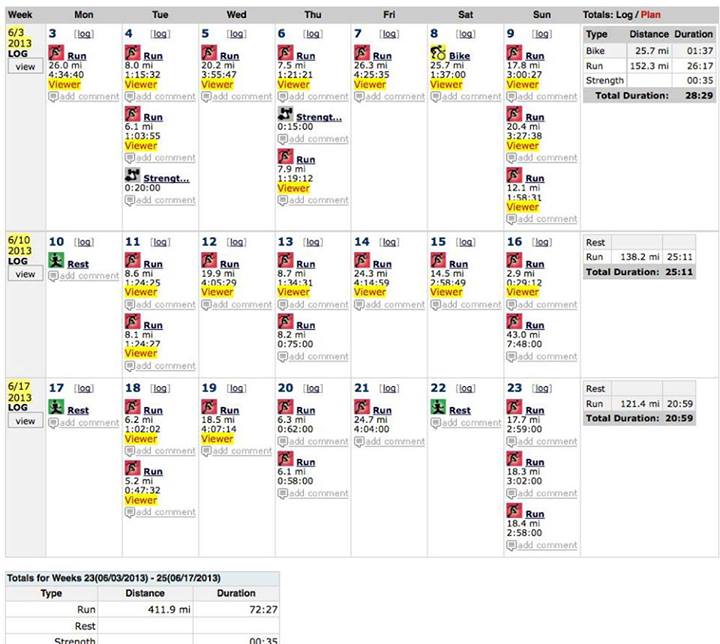
A snapshot of my first three weeks of TRT training is provided below. During June, I was fresh, running well, having fun, running in a good variety of trails, keeping it healthy, while chasing Dominic Grossman on Strava’s “Junedoggle,” where thousands of runners worldwide logged their June runs to see how much volume they could rack up. This virtual competition, of course, can be a little dangerous. After one too many corrupt Garmin files, I bowed out of the Junedoggle. I needed to take a rest-week anyway! I think I would’ve ended up in 5th (behind Dominic). Anyway, the Junedoggle served its purpose. Keep it healthy and fun, and Strava can be a highly effective training tool. Know thyself!

juneWe do the most training we can absorb. June is the month where I have the time to train most effectively since I’m off for the summer. I can do and absorb more training since I have more time to do all the things that effective recovery involves, like sleeping more, preparing and eating nutrient-dense meals, making smoothies, foam-rolling and stretching, taking ice-baths, relaxing, etc.

I ran 500 miles during the month June with 82,000′ of climbing. I’ve never done this much volume before, even when I was preparing for road marathons. This 90 hours of predominantly trail-running is what most directly contributed to my performance at TRT on July 20th. It’s important to note that I arrived to July healthy, definitely “feeling it” and ready to taper, but with no problems to speak of. The two primary contributing factors to my sustained high, quality volume were, a.) training entirely in Hoka One One trail-running shoes and b.) supplementing my pre/post workout nutrition with Master Amino Pattern (MAP), amino acid tablets that promote a higher level of protein synthesis within the body. I highly recommend you try MAP for yourself during your next phase of bigger volume run training. Speaking from direct and successful experience, you will recover more effectively. And when you’re able to do more quality training, performance results are inevitable.

map100UltraRunnerPodcast (URP) – Master Amino Acid Pattern (MAP) Review

Endurance Planet – Ask the Doc Special: Your Guide to Understanding Master Amino Acid Pattern (MAP)

Interested in a 20% discount on MAP? Just click on the MAP bottle or BodyHealth logo on the far right side of this site. Find MAP, order that amount you’d like, then as you move through the checkout process, ensure you do the following:

  • Enter “20in the “Redeem a Coupon Here” box. 
  • Click “Shebest, Bob” in the “Referred by” drop-down box (names sorted alphabetically).

BodyHealth purchases MAP more frequently than do other online vendors, therefore it’s likely to be more fresh. Additionally, after your 20% discount, the price you pay will also likely be under what you’d see elsewhere. BodyHealth: fresh, less expensive, and founded by an accomplished endurance athlete to boot!

A word on technology. Leading up to TRT I was having constant headaches with my Garmin 910XT’s heart-rate monitor strap, to the point that I’d just about committed to racing TRT without HR. My heart-rate data, on two different straps, was intermittent and therefore affecting my average HR, which is the piece of data I most want to count on in racing. After trouble-shooting with various Garmin devices and changing the straps’ batteries, I took my two faulty straps to Echelon Cycle & Multisport where I soon learned that Garmin released a new strap with beefed up sensors; a third sensor on the left to more reliably read HR (remember folks, our hearts reside in the left side of our chests (think Pledge of Allegiance). Thank you to the intelligent folks at Garmin. Game on!

garminHRM

The Ultimate Direction AK Race Vest continues to be indispensible for any event I do, 50mi or above. I prefer to use Amphipod bottles with the vest. The various pockets are incredibly handy for stashing gels and the miscellaneous items we like to carry during ultras. The vest not only frees up my hands for more efficient running and power-hiking, but also frees up my short pockets for trash. Bottom line, this vest allows me to optimally manage my sh*t, so I can concentrate on the important things, like not falling.

photo-1
“Oh God, what have I gotten myself into here?”   –Photo Credit: Janet Siva

Pacing the First Half. So, assuming we would have reasonable temps, I believed that if everything else fell into place, I might have a shot at lowering Crawford’s 2010 CR. Ultimately, the pace of the first half would be decided by the pace run between the high and low limits I set into my Garmin, which at the start were 125-135bpm. Within the first hour, I soon realized a change to those zones was in order. I’d never run a 100mi event with HR before, so I wasn’t very dialed with my zones, thus I set them up conservatively to start. So, I reset my zones to 130-140bpm. At this effort, I felt entirely within myself especially since my breathing was controlled. I continued to monitor both my current heart-rate and average heart-rate, displayed on my watch. I played the game of running between this HR floor and ceiling. When I was above or below, my watch would simply vibrate (no audible alarm) and I would adjust accordingly.

After a few hours, with my HR still well below my average 50mi event HR of 142bpm, I decided to change the zones one last time to 132-142 and ran in these zones to the half-way point back at the start/finish at Spooner Summit. Along the way, I slowly moved from 6th place up to 3rd by about mile 45, where I spied recent 2:30 marathoner, 2013 Silver State 50 and Quicksilver 50 champ, Chikara Omine, inside the Snow Valley Peak aid station. Snow Valley was all hustle and bustle with 50k runners and I shot out of there with full bottles of water, hoping to open up a gap on Chikara while still staying within my dialed HR zones.

Because I’d changed my zones, I’d arrived, earlier, to the Diamond Peak aid station at mile 30 before my crew (aka: my wife, Amanda). The same thing happened in 2010. Totally my fault, I scrambled to find some de-caffeinated Clif Shots. Since there were only caffeinated Shots on the aid stations table, I threw myself at the mercy of the spectators. My new hero, Jason Riddle, among others, handed me some Razz and Chocolate Shots and I was on my way up-n-over Diamond Peak and back down to Tunnel Creek aid station, where I had an emergency stash of gels in a drop-bag. No ultra is complete without a bit of drama!

Amanda was there to meet me at mile 50, handed me a big bottle of water to guzzle, replaced my Amphipods with two fresh bottles, stuffed my vest pockets with Shot, handed me an icey hand-held Amphipod to use solely for cooling, and gave me a fresh Garmin 910XT for the second half of the race. We ran out together, her offering words of encouragement while also reminding me to run my own race and be smooth. The last thing I heard was a guy shouting, “You’re in second place but you have 50mi to catch him! Settle in. Back to my mantra: “Steady. Relaxed. Breathing.”

trtfirsthalf
Tahoe Rim Trail 100 – First Half (Strava data)
trtfirsthalf
Tahoe Rim Trail 100 – First Half (Strava data)

Racing the Second Half. Perhaps it’s more: continue-to-pace-well-in-the-third-quarter. It was mid-day and the temps were up there in the high 80s to low 90s. It’s 2000′ and just under seven miles back up to the next aid station at Hobart. With over a mile to go to Hobart I was completely out of water and had to conserve by slowing the pace. Grateful to arrive at Hobart, I took on plenty of fluids and departed with about 52oz of water. Not wanting to carry a bottle, I stashed the hand-held in my vest’s back compartment and reached for it regularly to splash my head, face, and neck.

First place runner, Josh Brimhall, had come into—and left—the 50 quite a bit before I’d arrived. Now sandwiched between him and Chikara, I certainly had the motivation to keep my head in the game, though the inner demons were awakened with the mid-day sun. Mental and physical fatigue was on the rise as well. Josh had bested me at Lake Sonoma by some 20min. Chikara had run a smart race at Silver State the month before, and dropped me on a long climb up to mile 40, ultimately winning by 13min. “Steady. Relaxed. Breathing.”

1052444_466122393501931_1350989370_o

The third quarter of any endurance event is tough, for obvious reasons. Tired of my watch vibrating, I took off my trusty HRM strap and stowed it away. At the half, I saw that my average pace was 10:06/mi. That wasn’t the 9:50/mi I dreamed of running but it was hot and this pace was close enough to start me thinking once more about the possibility of besting that course-record. To arrive at the finish in 17:47, I’d have to average 11:14/mi. I set my Garmin’s Virtual Pacer to 11:14 pace and continued on.

Climbing somewhere between Hobart and Tunnel Creek, while imagining Josh an hour ahead and Chikara a minute behind, I looked up and spied Josh walking with his pacer. The time had come for a predator-prey role reversal. As I moved passed Josh and his pacer we exchanged words of encouragment. I pushed the effort a bit to open up a gap and get out of site. From about mile 55 or so, I would be in new territory at TRT, that is, on the front.

1074035_464680276979476_1410958163_o

With the day’s real-life competitors in my rear-view, it was time to chase the ghosts of TRT past, namely, Thomas Crawford. Anyone else with a faster time on this course was fair game too. The Tunnel Creek aid station was pumping out music and cheers as I again weighed in, filled up, and descended into the infamous 6.5mi Red House loop, which descends east off the ridgeline and loops back up to the Tunnel Creek aid station. The legs were protesting on the steep, sandy descent. Then, at about 2mi into the loop, nausea set in. Before I had time to decide what to take (Tums, or Pepto, or a ginger-chew) I found myself vomiting on the side of the trail. It wasn’t, however, the complete bodily shutdown I’d suffered through at my first TRT in ’09. This upchuck episode lasted only a minute or two. Once purged, I found myself once again moving down-trail toward the aid-station, situated in the middle of the loop.

Through the aid station, I probably walked and power-hiked most of the 3mi back up to the top of the ridgeline. On the way up, Chikara was coming down. As a competitor I was not sad to see I had a good lead on him now, and at the same time I was glad to see that he’d not dropped. Anything can happen in a 100 miles. Just keep moving >>>

892437_10201574485623406_1926904430_o
Amanda with Michael’s son, Dylan, hangin’ out at Diamond Peak aid-station — mile 80. Can you spy the bulldog?

Now that I tossed my cookies and the thought of gels was repulsive, I knew the time had arrived to go to Coke. Filling up one bottle with soda and the other two with water at Tunnel Creek (mile 67), it was time to get up to the flume trail and swoop down to Diamond Peak to meet Amanda and my pacer—best-man for the job, wedding or otherwise—Michael Cook.

Myke Hermsmeyer Photography
Photo Credit — Myke Hermsmeyer Photography

On the way down the 4mi flume, I’d made up some ground on virtual Thomas Crawford. He was now only 15min up. But, I was at the bottom of a 2000′ climb and naturally, I was pretty exhausted from the day’s 80mi effort. Out and up we went, Michael pouring on the encouragement as we climbed the sandy Diamond Peak ski slope. Looking up-slope was demoralizing, so I chose to keep my head down and focus on sandy foot-holds, determined to just get the job done.

1077059_10201582605386395_191540281_o
Don’t think, just do. — Photo Credit: Michael Cook

Boom! Once back up on the ridge, we cruised with some good light left in the day. Down through a rowdy Tunnel Creek—where I wouldn’t have minded sitting down for a few minutes. In between Tunnel and Hobart, the headlamps went on and the arduously simple task of moving forward was stark before us. My trusty mantra “Steady. Relaxed. Breathing.” now too complex to employ, was re-tooled to one word: FLOW.

It ain’t over ’til it’s over. I had a sense of where Chikara was, but really no idea how Josh was doing. I’d looked over my shoulder more than once on the way up Diamond Peak expecting to see him charging up after me. You just never know…

Finally arriving at Snow Valley Summit, Michael got some chicken broth into me. I filled up with some more Coke, and it was go-time down the fairly technical, switch-backy descent to the finish. I’d picked up my iPod at Diamond Peak but hadn’t used it yet to this point. With one earbud in, I jammed to some Springsteen, Imagine Dragons, Cash, and U2, yo-yo-ing back-n-forth between complete elation and complete exhaustion. Following Michael’s cues to slam more Coke, I was making full use of my downhill running speed, keeping the turnover high so as not to face-plant into a rock and knock myself out. From the top, I was some 24min behind virtual Crawford. By the finish, I’d got back only 8min. Not enough. But, I was totally stoked to have run 18:03, now the second-fastest time run for the Tahoe Rim Trail 100-miler. Until next time Crawford, virtual or otherwise!

trtpartb
Tahoe Rim Trail 100 – Second Half (Strava data)

Results. First half in 8:27 (10:06/mi). Second half in 9:35 (11:26/mi). I came up short on the CR but reached my goal of running the second half of the event 14% or better. I was 11.8% slower over the second 50. That’s for you Gary Gellin!! Thank you.

Endurance Planet, Ask the Ultrarunner podcast (7/25/2013): The Pooping Runner, Habits of Ultrarunners, Using HR for Ultra Pacing, Ultras in Heat, and More

Mountain Peak Fitness

In recent days I’ve tried to express my sincere gratitude to all those folks that followed along on Saturday, all the folks associated with the Tahoe Rim Trail 50k/50mi/100mi, the spectators, friends near and far, the Cook family, Inside Trail Racing, and my lovely and supportive wife, Amanda. Running well in an “A-Race” means quite a bit to a runner. And at 39, who the h*ll knows how many of these I got left in me! All the support along the way helped create my masterpiece, if you will. What I’ve written here, is my attempt to educate—and maybe even inspire a little—those of you chasing your “Cool Impossible.” Good luck out there and stay in the flow >>>

Pump Up the Volume

boomboxes_17

Every once in a while it’s fun to throw caution to the wind and just see what you can do. If you’re training for a one hundred mile endurance run, it’s probably a good idea to pump up the volume for a few weeks in training in order to get the body—and mind—ready for the big dance. As my favorite saying as of late goes—No Challenge. No Change.

Last week was my “Run DMC” for 2013, that is, last week I ran the most amount of miles with the most cumulative elevation of any other week of the year. The “DMC” in “Run DMC” stands for Days: Many. Consistently. During a Run DMC, you set a training goal that is “crazy smart.” To the outside observer, they’d be quick to dismiss you and say stuff like, “Dang son, you so crazy” or “Whoa sucka, that’s wack.” These folks think you have a screw loose. Little do they know that you’re a flash endurance sports wizard and can rock a training week jam like there’s no tomorrow. You know how put it together and make it flow, slow and low, and with some tempo.

I conducted my Run DMC last week, the week of June 3rd. Normally, I train in hours, not miles, but during a Run DMC, I like to go old school. So, I set the stage to run 150 hilly trail miles with about 30,000′ of elevation gain. I naturally like running long, that’s what I’m good at so that’s where I have the most potential for improvement. Yeah, weaknesses can be strengthened but we’re always going to grow most in the areas where we’re strongest. Why? Because we like doing stuff we’re good at! Thus, I figured this goal was crazy smart. It might not actually be that crazy to another runner who’s stronger, faster, and/or more talented than I. Likewise, it may not be that smart for a different runner to attempt my specific Run DMC. You have to know yourself and create challenges that excite YOU, and won’t leave you injured on the other side.

I’d come off Silver State 50 miler in good shape. I’d set my year up so that I could essentially rest the final two weeks of May, absorb Silver State, finish the school-year, and enjoy my students. So, I’d come into my Run DMC and find myself with two weeks of rest in the bank, it’s June in Sonoma County, and I’m out on summer vacation. With my teaching schedule, it’s best for me to do my A-Race of the year in later July so I can take advantage of training and weather in June. The Tahoe Rim Trail 100mi/50mi/50k is a battle I pick because it falls at the perfect time of year for me—lots of time for a healthy, fun build and time to fully recover before heading back into the classroom in August.

trt

The Tahoe Rim Trail 100 (TRT) is an especially awesome trail running event, celebrated on pristine trail surface between 6000-8000ft elevation in Lake Tahoe. I’ve run it in 2009 and a little better in 2010. Of all the events I’ve ever done, TRT’s my favorite because of the venue’s astounding beauty and the challenging nature of the distance, terrain, and competition. Now I can’t expect to improve over my 2010 performance if I don’t shake things up and train differently, that is, training crazy smart. My Run DMC last week simply set the tone for the rest of my TRT training this month. Here’s how it played out [see training log below for reference].

Long Run. When doing a Run DMC or any bigger training week I prescribe to an hard/easy approach, keeping the easy days easy so the harder—quality—days can be harder, or higher quality. We want a nice return on our training investment so we gotta go easy when that’s the most appropriate thing to do. Ration energy accordingly. Just as success in a 100 miler is about being steady, so are these long runs.

Mix Master. Variety is the spice of life and I simply must run in different places to keep my sanity. Also, I like to run loops whenever possible. So for my Run DMC I book-ended my weekday running with long runs at Lake Sonoma on Monday and Friday. This loop is not only picturesque and fun, but I’ll bank about 5000′ over the my 26mi loop. These two runs alone account for a third of my Run DMC elevation.

Tempo. I built some tempo into my Wednesday–midweek—longer run at Sugar Loaf Ridge State Park. Sugar Loaf has the most similar terrain and inclines I’ll see at TRT so I’ll be running there a lot during this month. In just a 20mi loop, I can net 6000′ of vertical. Because I was concentrating on volume last week, I didn’t want to do a lot of tempo because too much intensity with very high volume is a recipe for disaster, and I have a lot more running after my Run DMC. Thus, I only had about 40min at tempo effort (1800′) where I pushed it up to the top of Bald Mountain, where I subsequently bonked and could not push to tempo later ’cause I didn’t bring enough calories. Tomorrow, I’m heading back, setting up my own little aid station atop Hood Mountain and see if I can rack up about 10,000′ of vertical. l definitely need a few of these efforts in my legs for TRT, which has about 25,000′ of vertical over its 100 miles. We do reap what we sow.

The Triple. The triple run on Sunday is inspired by fellow ultra-runner Duncan Callahan. A few years back, when I was learning how to prepare for a 100 mile run, I was intrigued to learn Duncan would conduct three runs in one weekend day. I’ve adapted this approach into my own training. I set out to do three 3-hour runs, one in the morning, one in the mid-day heat, and one at night. This way I can most simulate what running all day at TRT will be like without actually running all day. I gave myself four hours in between runs which might sound like a lot but with commuting, ice-baths, eating, and relaxing in between, the time goes fast. It panned out pretty well. The middle run went a little over so the last run didn’t need to be so long. It was kind of nice since I only needed about 10mi on that last run to hit my Run DMC goal. It was also nice to see my wife, Amanda, periodically instead of leaving the house at o’dark 30, run for eight hours and come home and be catatonic for the rest of the evening. Breaking up nine hours into segments throughout the day was really pretty tolerable.

adidas-run-dmc-superstar-1-1

Recovery. On Tuesday and Thursday, I’d do two shorter runs at an easy pace, to help keep the volume up without all the fatigue from running longer. Normally, I train is Hokas, but last week was special. I did all my running in a totally awesome pair of Adidas Superstar 80’s, which feature premium buttery leather uppers, 3M black stripes and heel tabs which pay tribute to DJ legend Jam Master Jay, complete with 1986 ankle signatures and dookie chain lace jewels. Pretty nice ride but I have to say, I love my Hokas more.

A Run DMC is best conducted during a week where you’re off from work. This way, you can train relatively stress-free. I might be out of school, but I’m still working a few hours everyday talking with and developing training plans for athletes I coach. But still, I can do that from home on my laptop in the backyard. During a Run DMC you want to wake each day without the use of an alarm clock. You want to take ice-baths after every long run. I grabbed a 20lb bag of ice after my second run on Sunday and jumped in the tub with it for 10min. I think it made a significant difference in how my legs felt for the night run. Tip for the ice-bath—fill the tub with cold water. Get in. Then bring in the ice.

I use compression tights after bigger efforts. I try to foam roll everyday and work on stuff that hurts. One thing about a Run DMC is that you’re training so much that you might just find that most if not all of your issues seem to vanish since you’re so loose from training. Of course, this is a temporary state but it’s sure nice while you’re in the midst of it.

Cycling. Saturday was really the day that held it all together. Getting on the bike and just spinning really helped the legs recover and prepare for a busy Sunday running. On Monday, post Run DMC, I was pretty wiped out, and ended up taking a full rest day, as planned. Today, I got in my scheduled two 75min runs and the legs are goin’ okay. Now lookin’ forward to a big day climbing tomorrow. We’ll see how that goes…

Overall, the Run DMC was a success and will surely be remembered when I toe the line next month at TRT in my fly new pair of Superstar 80’s. Game on >>> 😀
mon-thurs

fri-sunRun DMC (Days: Many. Consistently)

Silver State 50

silver state 50
Photo by Patrick McKenna

Confidence was high coming into Silver State this time around. I’d raced here once before in 2009 as prep for my first 100 at Tahoe Rim Trail. It was hot that day and I suffered through an 8.5 hour ordeal it took me four years to [almost] forget. Recovery from Lake Sonoma last month went well—I rested up for a stretch, put in a monster week culminating with a 35-miler with lots of climbing, then used a little reverse-taper action inspired by Galen Burrell’s Lake Sonoma blog-post. I’d never run so much the week of a 50-miler before but if you don’t try new things, how the heck can you figure out what works best for you? My feeling is that it did, in fact, work better than a more traditional taper.

A lot of things became crystal clear after Lake Sonoma. I need to continue developing my muscular endurance for ultra running, so that I’d have some decent power to continue pushing my heart-rate over the final 25% in events. There’s so much great information out there now with blogs, social media, podcasts, and the like. Gary Gellin had sorted the Lake Sonoma results and determined the average runner ran the second half of that race 20% slower than the first. I’d run the second half 18% slower while winner, Sage Canaday, slowed only 9%. Anyway, Gary’s big on heart-rate and that got me thinking.

According to Phil Maffetone’s “Maximum Aerobic Function,” or “MAF” as it’s commonly called, my heart-rate “sweet-spot,” at 39 years young now falls at about 146 beats per minute (bpm). I’ve used MAF, on and off, since 1999, when I first read Maffetone’s book, Training for Endurance. Note: If you want to learn more about MAF, just listen to Endurance Planet’s Ask the Ultra-Runner podcasts. With about 20 Ironman triathlons under my belt, I’ve always tried to ride the 112mi bike leg at right around my MAF heart-rate and no higher so that I can get off the bike and run an effective marathon. I’d dabbled with MAF in ultra-running years 2009 & 2010. I did jump back into the Ironman game for two years, then hit North Face 50 last December, and wore my trusty heart-rate monitor, really just to help me hold back in those critical, early miles.

At the start of NF last year, I was cueing off of Leigh Schmitt and Hal Koerner as two guys I’d like to be near–or in front of!–at the finish. As the race got started, I soon found my heart-rate up at 147bpm and let those guys go, and, as Gary says, “just ran my own race.” I didn’t have any limits set on my heart-rate monitor (HRM) though, I just kept my breathing in check and did my thing. By the end and still running strong, I was only about 3-4min behind Leigh and Hal. That race totally rekindled my passion for the sport of ultra-running and ultimately inspired a return to the grueling, badass challenge of running crazy distances in the woods.

So, my average heart-rate at NF50 turned out to be 142bpm (the legs still need a bit more “iron” to maintain ~146 the whole way). Fast forward to Silver State. I set up some heart-rate zones into my Garmin 910XT. I set the low-limit to 140 and the high-limit to 147. When I fell below or rose above those limits my watch would simply vibrate (the audible tone drives me crazy Gary!) as well as give me a message indicating high or low out, although you can sense pretty well which is which.

So, as we ascended the 12 miles up to Peavine Summit at the start of Silver State, I just stayed right there in my zones, took gels and drank, and enjoyed the scenery. Chikara Omine floated up and away. A bit later, three fit dudes cruised on by too. My HRM was buzzing so I stayed back, my average heart-rate then reading 144, two beats above NF50 average but I was climbing to 8000′ so I felt I was within myself. Soon, all three guys came back, and a few miles later, there was Chikara.

Chikara and I diced it up a little and I was right where I wanted to be. I knew he was coming off Quicksilver 50 just a week before so it was reasonable for me to think he’d still be fatigued from that effort. But, I also know that you just can’t underestimate someone who shows up on the starting line of a 50-miler the week after they won a different 50-miler. So, I just went with the flow, ran smooth, and really savored the experience of running on the front with this talented young-gun, and a guy I’ll face again at Tahoe Rim Trail 100 in July.

I wanted to hit 50k in good shape. We descended to River Bend aid station at mile 33. I’d picked up fuel at mile 27 aid station so I only needed some water while Chikara headed to his drop bag. I started back up the climb in no particular hurry, knowing full well this was the moment where we were going to show our cards. Just a moment later, Chikara came by and that was that. He was motoring, and continued to open a gap all the way back up to Peavine Summit, six miles away. Still racing my own race, I could only hope I could catch him on the 10-mile descent back to the finish. Rule #1 in ultra-running: Never Give Up!!

Miles 30-40 in any 50-miler are tough. It was on this climb that I was tested most. The term, “hot mess” comes to mind if I had to characterize myself on this ascent. It was getting more difficult to keep my heart-rate up inside my established zones. The muscular endurance was better than at Lake Sonoma but I was starting to really lean against my limits here. Keep pushing. Stay positive. Breathe. Get there.

My right hip’s been giving me fits since 2008 and is one big reason I headed back to triathlon in 2011. I surely want to be doing this stuff for a long time to come and I wasn’t yet convinced ultra-running was for me, especially with the hip pain/discomfort. Running in Hokas seems to really be helping. Silver State was the first time I was racing in them. Once back up to the top, it’s a long, long way down to the finish. It really was “Time to Fly.” With these beefy bohemoths strapped to my feet, I bombed the next 10, trying to keep my stride-length long and take full advantage of the shoes. In my opinion, there’s not a better shoe choice for this course, especially if you often feel like an old lab with sore/tight hips!

I was still struggling to push the heart-rate to the low-limit of 140bpm, so… I f___ing lowered it, down to 135 and just worked from there for a while. With about 6miles to go, I said to hell with it and moved my data display over to just show average pace. It showed 9:00/mi. I was pleased. I’d not looked at average pace the whole race. But now, closing in on the finish, it seemed like the perfect motivation to keep me pushing (focus on heart-rate was simply no longer empowering).

My target time for Silver State was 7:15 (about 8:40/mi average). Over the final 10k it was good fun to watch the pace fall to 8:50, 8:48, 8:45, and so on. The last I looked before finishing it read 8:41. A good decision it was to focus on average race pace–It kept me working hard. I crossed the line in 7:18 and change (although the race results are still a bit off and have Chikara and I about 5min slower. Chikara won it in 7:05. Very impressive from my “front row” perspective. Two 50mile wins, a week apart. That’ll do something for your confidence. It’ll be awesome to dice it up with Chikara, Josh Brimhall, Thomas Reiss, and many others for 100 miles on the Rim Trail in July.

Some quick other things that went right. The Hokas, as I said, were great. They’re definitely keeping me “in the game.” Also, this was the first 50miler I raced with Ultimate Direction’s AK race-vest. I used two Amphipod 16oz bottles and this system worked very well for me.

Overall, between Lake Sonoma and Silver State, I’m eager to finish up the school year next week, and start TRT specific training. The volume will be down until then, though I do hope to get out with Leigh a few times whilst he’s still in our neck-o-the-woods (Leigh Schmitt is moving back East this summer, sad to say). I’ll be up in Tahoe for the Sunday TRT training run on 6/16. The goal now is to do the 50mile course that day.

Here’s some Strava data from Silver State. Ultra-running is a work in progress. All the down-hill running at the end made it especially challenging to keep the heart-rate up. In the end, my average heart rate for the event was 141 beats per minute, just one beat below the average at North Face 50. Everything really came together out there—pacing, nutrition/hydration, the mental game, gear selection, I didn’t get lost thanks to excellent course-marking and attentive volunteers. What a blast! 😀

silver state strava

American River 50 Race Report – by Richard Hunter (visually impaired athlete)

Hunter Bob Halpenny Embrace, Compliments of Lisa Chalstrom It wasn’t long after registering for the American River 50 Endurance Run when well-intended and caring friends privately started questioning why I would consider signing up to do something that ran a great risk of injury. At one point my wife, Heidi, came to me and asked if I had really thought this one through. Friends had told her about the dangerous terrain and sheer drop offs along the trails. After all, after losing most of my vision, I have had zero experience running on single track trails. I just recalled how much I enjoyed running on trails while in the Marine Corps 24-years ago.

To be perfectly honest, I wasn’t worried at all about those things that seemed to make others question my sanity. I would routinely say, “Sighted people do 100 mile races in the dark, so why can’t I run 50 miles during the day with the help of a guide?” Another common refrain was, “It is more likely for me to twist an ankle than others, so I’ll only train as much as necessary on trails and do the bulk of my training on solid surfaces.” After finishing a full Ironman, I knew I had the capacity for a long endurance event. I wasn’t sure, however, how my legs would hold up beyond a marathon distance since I have had plenty of cramping experience in my earlier running days. The prospect of a locked up hamstring as I stepped up and over big rocks late in an uphill race was admittedly a little daunting.

The first of many blessings came the day before the 2012 California International Marathon when I accompanied New Zealand blind marathoner Rob Matthews and his guide Matt Bailey to Sacramento Fleet Feet Sports to get the most for their currency exchange rate. They were receiving Nordstrom-like service from a woman by the name of Diane Forrest who was incredibly knowledgeable, had exceptional communication skills, and was extraordinarily patient. When I found out she had finished the infamous Western States 100, I asked her if she would have any interest in guiding me on some trail training runs. Fortunately, she isn’t the type to shy away from a challenge and loves folding new people into trail running. Diane was a natural guide. I came to the conclusion that trail runners have a special knack for guiding because they have to be very in tune with the surfaces themselves. The key was to speak what was normally a thought. Diane is also the one who introduced me to her friend and co-worker, Bob Halpenny, who shared her skill, experience and passion to volunteer.

California International Marathon (CIM)

AR50 Training Highlights:

When I set the goal of AR50, I told my coach that the December California International Marathon was not going to be my “A” race. I was using it as a build race to ensure I was logging miles to have the proper base for AR50. Instead of leading up to a marathon with speed work, I was instructed to train my body to run WAY slower, ultimately that meant running 1:30 to 1:45 min/mile slower than marathon pace for all my training runs. He threw in a few fartlek runs a few weeks out from the CIM and told me my body would remember how to run fast. Boy was he right! I ended up setting a personal best at the CIM, finishing in 3:17, despite driving rain causing isolated flooding and 35 mph headwinds during the first half of the race.

Humbled by Snowy Hills:

A few weeks after the CIM, I was back building mileage. We spent the New Year break outside of Klamath Falls, Oregon and the training plan included a 20 -mile run. It was cold and the roads were covered in snow and ice.  I was in luck. I learned about the Linkville Lopers running group and they had scheduled a 20-mile training run and they were willing to guide me along. When I heard that some were ONLY going to be running a 9 min/mile pace, I said I’d have no problems keeping up. Well…needless to say, to date, AR50 and Ironman included, I have NEVER gone for a run in which my cardio and legs suffered so much! Similar to trail running, the roads and sidewalks had no bold color contrasts to keep me in line, so it was incumbent for me to stay behind someone and listen to cues. As we left town and found ourselves on a country road, I quickly realized that I had embarked on a challenge I wasn’t sure I was up for doing. Not only was the altitude around 4500 feet, this run included some very long uphill climbs. It was slick and steep enough for my feet to slide back 6 inches with each step. My heart rate soared! I was humbled by the ease at which they ran up these hills. I couldn’t even talk at many points and was starting to wonder how in the heck I’d get back. I was growing colder and more exhausted as time went on. I became keenly aware that there was NO way Heidi could come and pick me up. She would have needed a 4-wheel drive with snow tires. I was too aware of the dwindling side roads and lack of structures. At one point, I recall asking if there were houses out that far. I was nervous that I didn’t have an “out” and was embarrassed by the prospect that this Ironman was going to crap out on a 20 mile run.  I had never been stressed about a run in my life, and kept it to myself because I didn’t want to alarm these kind people that the blind guy was going to become a casualty. My spirits lifted when we turned around. Every step would be closer to civilization. While I slowed down my new friends a little, they were now friends, so I allowed myself to walk a little more, let myself fall a little farther behind on the hills, and had shed my pride and arrogance long ago. My spirits started to lift on the way back, and I kept at it, feeling like a wimp the entire way. I was beyond relieved to see Heidi’s car at the finish, exclaimed “Thank God!” loud enough for everyone to hear, and watched my friends extend the 20-mile run as we drove off. This was not the confidence builder I was hoping for. I could rationalize that I had just ran a marathon and wasn’t used to running at altitude, but my goals this year included a 50-mile uphill endurance run and an Ironman at 6000+ feet of elevation. I had a great wake-up call and realized I had a ton of work to do!

Linkville Lopers

Running Wild:

I’ll never forget one of my early runs with Diane Forrest and her Fleet Feet running buddies; it also happened to be the first time Bob Halpenny took a turn at guiding me. We were planning to run the first 14 miles of the AR50 trail section from Beal’s Point to Rattlesnake Bar, which included the infamous Meat Grinder. We didn’t finish where we had planned, and it had nothing to do with me getting hurt. With about an hour to go, a young fawn slowly ran towards us. Bob first questioned if it had rabies because it was foamy at the mouth, panting, dehydrated, and not behaving like a wild animal. It came right up to us and sniffed at us as though it were a dog. Diane’s motherly instincts kicked into over-drive, and leaving the deer behind wasn’t sounding like an option. I kept my mouth shut. After all, I was along for the run, and these caring people obviously extended their humanity to more than just blind guys.  I recall thinking, “There is no way this is going to end well!” I was trying to imagine dragging a deer out of the forest for several miles and trying to fit it in the back of a car. Or, we would eventually have to leave and my new friends would be grief stricken.  My own thoughts revolved around the injustice of survival of the fittest, and knew that this poor little dear was going to be cougar food. Again, I kept my mouth shut and let things evolve, and evolve, and evolve.

As good fortune would have it, a couple of women on horseback came along and informed us that there was a fawn rescue nearby. I must admit that my only contribution here was my iPhone. It sure sounded more promising than initial calls to people with trucks. I just couldn’t wrap my mind around where that one would lead. As Diane made calls and wandered around the immediate area for the best cell connection, the fawn followed. We were in luck! The fawn rescue lady could meet us at Horseshoe Bar Road, but it was well over a mile away. “WHAT, I’m thinking, isn’t there going to be some sort of team extraction?” Unlike the rest, I wasn’t feeling that we were much better off than before. In fact, now survival was clearly an option if we could get the deer out of there without scaring it off which would certainly result in its peril.   First a lasso was fashioned but that was not appreciated by our new companion. Someone suggested, “Let’s just start running and see if the deer will follow.” After all, it seemed to be anxiously sticking close by. What a sight we must have been!  We started jogging along the single track trail, and wouldn’t’ you know it, that deer got in line, and ran right at our heels, moving up and down the line. Someone would call out, “Richard, it’s coming up behind you,” and I’d feel little hooves clipping at my shoes as though it was trying to give me a flat tire, and then it would run up along my side, and I could extend my hand and brush it’s big floppy ears with my fingers. Crazy cool! Our savior greeted us at the road and informed us that she couldn’t get her truck started, and Plan B started taking form in front of my eyes.  I was dumbfounded. “What? We miraculously got this deer to its final destination. Bring in the back-up, the back-up vehicles,” all of which was internal heartless dialogue. Plan B was to run back to where we were and then negotiate the terrain off trail to find the rescue off road. At this point, I turn off my brain, recognize that Diane and crew are going to live and die in those woods for that fawn, and I was just going to roll with it with great skepticism and admittedly great respect for those I was with.  About the time we got back to our starting place, the iPhone rang, and we found out the truck had started. So… back we went. Now, about 4 miles with deer in line, you’d think I’d have a little faith, but I’m a stubborn soul.  When I saw the crate for the deer, I could not keep my mouth shut. “How in the heck are we going to get that deer in there?”  It was a canvas crate that resembled a large dog kennel. She responded, “I don’t know, but keep walking past the kennel.”  Wouldn’t you know it, that fawn walked right into that box without incident!

fawn

Out of water and hours behind schedule, we asked for a ride to the car. First, however, we stopped at the rescue to drop off our little fawn.  At that time, I didn’t know my new friends very well, but I gained a ton of respect for them and had no doubt that I was in trustworthy hands. I’m forever in debt to them for creating this experience, and I’m humbled by their resolve and willingness to tackle a problem when a clear solution was not in sight.

How do I run on trails?

Retinitis Pigmentosa is a degenerative eye disease with progressive vision loss which can result in total blindness. While my missteps and mishaps occur with greater frequency, I’m still able to run by myself on familiar paved surfaces by following painted lines, the edge of a path with clear contrasting colors, and flow of the landscape. Since it is getting more difficult for me to visually discern the contrast of surfaces, I have been growing my own network of running partners, even in familiar places. I do not run in unfamiliar areas by myself and it would be impossible for me to run on trails on my own. On trails, the colors are all washed out and I have no depth perception. The landscape is a foggy wash. I couldn’t even walk on a trail solo without feeling my way, expecting at any moment to crash through the thinly veiled surface of an icy pond. In many places, only the feel of my feet distinguishes the trail. I think you get the picture. Running on trails requires extra special attention, especially when one has to negotiate areas with names such as “The Meat Grinder.” I tend to run about 6 to 10 feet behind my guide as they call out the obstacles they are negotiating. I can see the movement of their body and know when to anticipate steps as they call out things like “big step up,” “tight wire, tight wire, tight wire, stay behind me,” “root,” “stepping over a rut,” “running over the crest,” “quick feet.. land on your toes… technical,” “smooth runnable trail,” When there are gnarly and slippery, steep, or high risk areas, my guide stops at the obstacle, I put my hand on their shoulder, and I feel for the ground as I take a step, pretty much negotiating the section as a toddler. I don’t look down. I always look at my guide’s upper back.  If I look down, I can’t see them at all due to the extent of my peripheral vision loss. At times, I close my eyes as I negotiate very difficult steps so all of my focus and energy goes to the feel of my feet.  I quickly learned that the greatest challenge was going to be in staying focused. I must stay in the present and no amount of daydreaming is an option. One misstep could be the one that puts me on the ground.  Consequently, I’m very slow on trails which ironically take off some pressure because it isn’t about how fast; it’s a matter of just doing.

ar50_clif

Race Day:

Quite uncharacteristic for me, I had no serious setbacks in my AR50 training journey. More often than not, I normally spend several months in physical therapy while simultaneously building for a key event. I credit slowing down and a relaxed mindset to the difference. I discovered a new level of joy in running through my regular running partners Diane, Bob, and Matt. Even 20-mile runs began feeling routine and my weekly mileage entered new territory with no issues.  2-weeks out, however, my youngest daughter caught the flu and had a 104 temperature; I did what anybody would do, I gave my little 6-yaer-old the love and comfort she needed, started taking more vitamins, and crossed my fingers. Then my wife and oldest daughter caught a bacterial flu, accompanied by a rather nasty case of pink eye. I even told Heidi that, if I was going to get sick, it better happen early in the week, so I’d have time to recover. Then, on Monday of race week, I started showing the same early signs of the same flu, and the doctor prescribed antibiotics sight unseen. It must have been perfect timing, because my double pink eye didn’t go anywhere else, and I was feeling close to normal race morning.

Since injury and illness would not be standing in the way, negotiating technical trails safely, mental toughness and my ability to diligently follow my nutrition plan were going to be the keys to success. My friend and Ironman sport’s nutritionist Sheila Leard crafted a plan that was much different than my triathlon plan. My calories were coming from solid rather than liquid sources, but I had plenty of time to practice this so we could tweak the plan if necessary. She calculated the amount of fluids, calories and electrolytes I’d need and we set up a “feed” schedule. I set my Garmin to send me an alert every 15 minutes, and with the help of my guides, they’d let me know if we were on the top or bottom of the hour, because clock position meant different things and my mental clarity would deteriorate.

About the same time that illness took hold in the Hunter household, I started getting a few race jitters. This is the same time other ultra runners were reminding me that I’d learn a lot about myself that day, that I’d suffer, question my sanity, perhaps feel that I couldn’t continue, but that this feeling would pass, and I’d come through the other side.  Suffer? Coming back from the dead? That was not part of my mental imagery. My image of success, branded into my mind by Diane Forrest, was that I’d be one of the few running up Last Gasp, which is a long 1000 foot elevation climb at the very end of the race.  So, the jitters resulted in an unpleasant picture of ominous clouds in the distance as I ran with ease during the first 30 miles.  I had to fight to rid myself of that negativity and remind myself how much fun I’d been having running in recent months with people exploding with positive energy. By Saturday morning, my brain was in the right spot. I was now repeating the mantra I had heard months ago, “Don’t be an idiot the first half, and don’t be a wimp the second half.”

After an expected amount of sleep on the eve of AR50, which means between 15 and 30 minutes for me, my alarm sounded while I was awake at 3AM. “No problem!” I didn’t sleep a wink before Ironman and I was fine.

A couple of weeks before the race, Bob introduced me to Erik Escher, also from Fleet Feet. He was tasked with helping me negotiate the logistics of the dark start and guiding me the first 14.5 miles. We stayed right on track with our pacing plan and he handed me off to my good friend Matt Linderman who had been running with me weekly for several months. While Matt only had to guide for just over 12 miles, he also had the responsibility of getting me through the first 4 mile section of trails; a misstep that early in the day would not be good. Having never run a trail race before, one thing I hadn’t given much thought to was how your relationship is so much different with other participants. When people pass you, you end up having a quick one-on-one connection with each person. Since I was wearing the word “Blind” on the back of my hydration pack, everyone coming up behind me saw it, and more often than not, gave me words of encouragement, even while standing still as packs of runners blew by us on technical sections. I was surprised how many people knew who I was, and complete strangers would shout out, “Richard, I heard your interview on Ultra Runner Podcast.”  Some had questions as they jogged behind, and I quickly realized that my attention would be divided throughout the day, and I had to be extra vigilant.

Hunter AR running

Matt got me to Beal’s Point at Folsom Lake incident free, and Bob Halpenny ran up alongside to direct us to my pit crew to change into my trail shoes, refill my hydration pack, and replace my electrolyte water bottles. My pit crew included my wife Heidi and 3 daughters, Kiersten (16), Lindsey (12), and Makenna (6). They were all a great help. I felt great at mile 27 and knew I might not look so great at mile 40 when I saw them again. My longest training run was 30 miles and I knew I’d have to get through the gnarly section of the Meat Grinder before the next pit stop at Rattlesnake Bar.

Now, a little about Bob… For those of you who have read the book, Born to Run, Bob, 63, exudes the same positive love of running and has the ultra runner charisma that is involuntarily injected into your soul. He is a Western States 100 finisher and has helped a lot of people reach their running goals. He’s a student of form, diet, and kettle-bell. Bob would later tell my wife that he has never talked so much while running in his life. My wife laughed as she knew I bend many ears, but Bob didn’t throw me under the bus. While I’m sure the former was true, Bob had to constantly talk as he ran to keep me safe, and he took that part VERY seriously. I trust Bob implicitly because of this and didn’t have to waste an ounce of energy worrying about the terrain. It was impossible to take away the risk, but Bob knew how to make it manageable.

Although I had ran nearly all of the trail sections of AR50 while training, and knew that I’d be going slower than my real fitness level, I still got a little frustrated by how much slower I was than other people. It was the only way, but it was a tad frustrating nonetheless. We had to stop and clear the way countless times as packs of people would go streaming past. Bob would say, “Don’t worry about that. We’ll catch them later.” But, later didn’t seem to come fast enough. Even though the others also had to hike through and up the steep, rocky, slippery sections, I was much slower still. On top of that, it was exhausting. I was breathing harder and my heart was pounding faster on these sections than when I was running. It took an intense amount of focus and each step was uncertain which added to the fatigue. This went on and on and on… Risking sounding negative and a little whiny, I said aloud, “Geez, this is going on forever!” Bob quickly responded, “Stay in the present!” As an experienced ultra runner, Bob knew I couldn’t worry about the grandness of what lay ahead. I also had the benefit, however, of having countless words of encouragement from Bob about how “powerful” I was running, which meant a lot to me as I wasn’t feeling like that.

Hunter Almost there

It’s also important to note that I had an additional benefit that others did not. All of those people streaming past me were saying things like, “You are my inspiration for today.” Others would call out, “You two make a great team!” I had a steady flow of angels passing me and lifting me up on their wings, so the frustration of going slow was trumped by these endless one-on-one quick encounters. One runner was so enthusiastic about my participation that Bob directed him to the podcast (linked below) if he wanted to learn about my story. At this point, Bob knew I was starting to struggle staying directly behind him and my attention could not be divided. Good man!

As we were approaching mile 40 for my 2nd and last crew stop with my family, I started becoming emotional. I knew two things:  I knew I could finish and I’d be seeing my family, well behind schedule, in a few seconds. My throat constricted and I could barely breathe. My eyes welled up and some audible sobs escaped my mouth. Instead of entering the aid station with a smile, I was starting to look like a train wreck as though I was struggling much more than I was. Heidi later told me she had texted a friend saying she wasn’t too sure what would happen because I wasn’t looking very good.  I sat down on a chair as they went through my pre-prepared check-list, and I simply tried to focus on my throat opening up so I could breathe. It wasn’t until we’d gone another half mile that I relaxed to the point that I could breathe easy.

We were anticipating smooth sailing and catching those who had passed us over the next several miles. Yet, we quickly realized, that while there were many areas of runnable surfaces, there were still sections we had to negotiate that felt like downhill river beds. We’d start to catch a group of people, heightening Bob’s enthusiasm, and then we’d be back at the side of the trail watching people stream by in packs.  I was looking forward to Last Gasp, while I’m sure others were not. I had run that section a couple of times and knew that they were access roads, not single track trail.  I thought of Diane’s expectation for me that day, and it strengthened my resolve.

The last several miles are a steep uphill climb. When we left the aid station at the bottom of Last Gasp behind, I was absolutely determined to run up that doggone hill. Bob knew it, and at this point started calling out, “Come on horse!” He lengthened his lead to the edge of my foggy vision and plowed ahead. Those around me were all walking up that hill. I thought about Diane’s words and I thought about the “Blind” sign on my back. Out of sheer respect and admiration for all my visually impaired and blind friends, I told myself, “Everyone I pass will remember a blind guy was running up Last Gasp and never stopped running.” That act alone, in my opinion, might change a few people’s perception of those with vision loss. I didn’t take pride in beating them up the hill necessarily as each one of them had said kind things to me as they had passed me earlier in the day. Bob continued to yell out “horse” and I kept plowing along. I was admittedly tired, but nothing was going to stop me from running up that infamous section.

I was greeted by the shouts of friends and family as I approached the finish. My swim partner Tom Leard jogged a stretch alongside us. Not only did I live out the vision of my finish experience, I crossed the line with my dear friend Bob in 10 hours 24 minutes and 35 seconds.  My family and more friends were there to congratulate me and I received my AR50 finisher’s medal and jacket. Real race closure for me, however, didn’t happen until I sat in church the next morning, weeping once again, thanking God for those who helped me accomplish this goal and for the memories that will last a lifetime.

Hunter AR finish

Links to Recent Interviews of Me:

Ultra Runner Podcast Interview:  http://ultrarunnerpodcast.com/richard-hunter/.

2013 USABA Military Sports Program Video:  http://youtu.be/438tcN6cgEw


If inspired, please help me in my goal to raise funds for visually impaired and blind runners taking part in the USABA National Marathon Championships, Sponsored by VSP Vision Care, by making an on-line donation at: https://usaba.myetap.org/fundraiser/runforareason/individual.do?participationRef=849.0.255528971.  I started this event, am the volunteer program coordinator for the USABA National Marathon Championships, but this is the first time I’ve ever asked my friends to give to this cause.  You can also mail checks made payable to USABA to me at the address below. Each dollar counts, so please consider helping even if you can only afford $10.00.

Filled with gratitude,

Richard Hunter

Visually Impaired Ironman, Marathoner, and now… ULTRA RUNNER

988 Palmer Circle

Folsom, CA 95630

rhunter988@att.net